

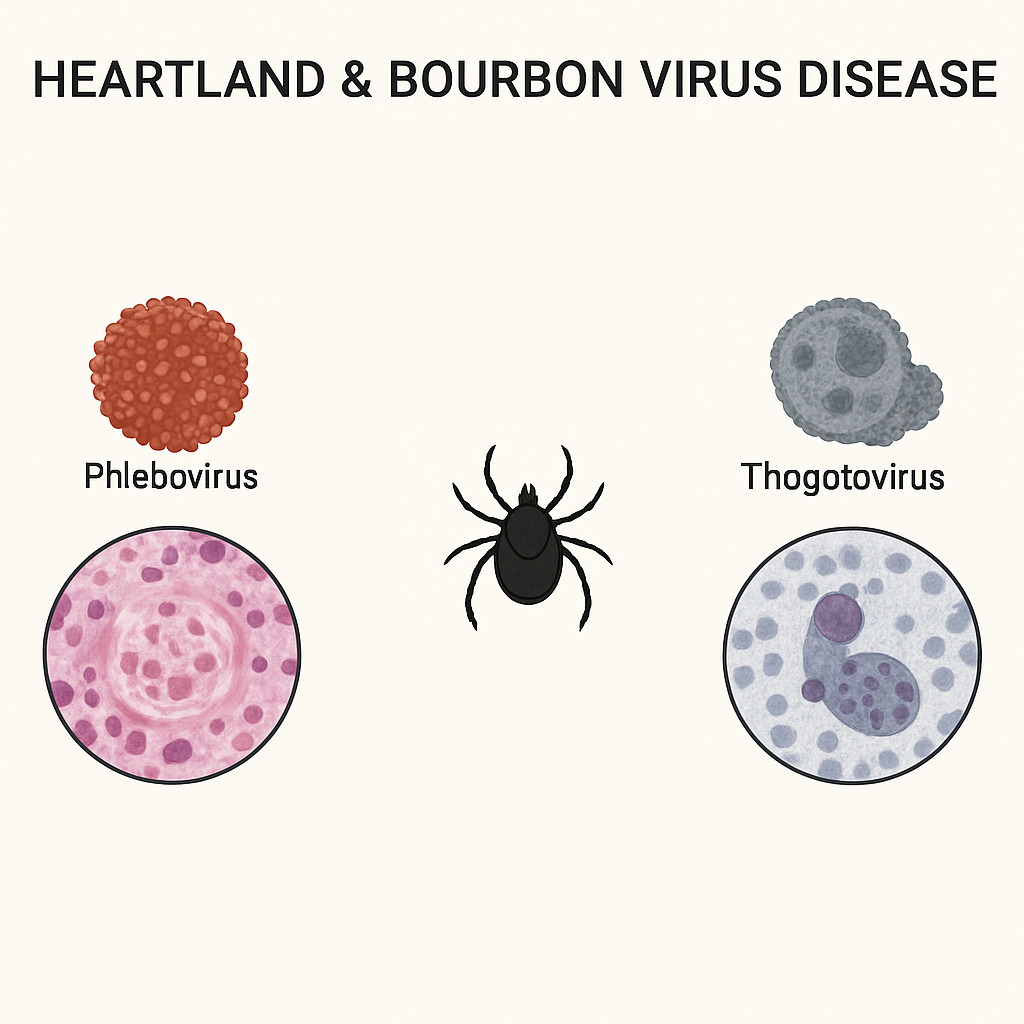
The Kansas Department of Health and Environment (KDHE) and the Centers for Disease Control and Prevention (CDC) reported the discovery of a new virus in 2014. It was linked to the death of a Kansas resident in Bourbon County, Kansas. Hence, the virus was named Bourbon virus, after the place it was discovered.
The patient worked outdoors and often had tick bites. He was admitted to the hospital with high fever, muscle aches, fatigue and loss of appetite. Liver enzymes were elevated and white blood cell count and platelet count were decreased. These symptoms and laboratory results resembled those that occur with other tick-borne diseases such as Rocky Mountain spotted fever, ehrlichiosis or Heartland virus disease.
A limited number of Bourbon cases have been reported in the Midwest and southern United States. They have experienced symptoms including fever, fatigue, rash, headache, myalgias, nausea, and vomiting. At this time there is no vaccine or specific treatment for this virus.
Bourbon virus is an RNA virus in the genus Thogotovirus of the family Orthomyxoviridae,. It is similar to Dhori virus and Batken viruses, which also infect humans in Europe, Africa, and Asia. Bourbon virus is the first species of the genus Thogotovirus to be identified as a pathogen in North America.
Although the definitive host of Bourbon virus is unknown, transmission in North America occurs through the bite of the Lone Star tick, Amblyommas Americanum. CDC has detected antibodies to Bourbon virus in white-tailed deer, raccoons, opoosums, and birds.
CDC has developed blood tests that can be used to identify and confirm recent Bourbon virus infections.
Reference
Hao S, Ning K, Küz ÇA, McFarlin S, Cheng F, Qiu J. Eight years' advances on Bourbon virus, a tick-born Thogotovirus of the Orthomyxovirus family. Zoonoses. 2022 Jan 6;2(1):18. doi: 10.15212/zoonoses-2022-0012.



 How to resolve AdBlock issue?