

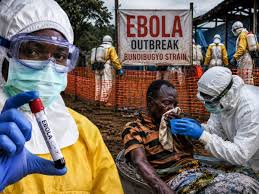
Bundibugyo virus disease is a type of Ebola disease that causes severe and often fatal viral hemorrhagic fever. Zaire ebolavirus is the most common species responsible for outbreaks, followed by the Sudan ebolavirus. Bundibugyo ebolavirus is a rare species of ebolavirus that has only emerged twice before. It was first identified in Uganda in 2007, when it caused an outbreak with 149 suspected cases and 37 deaths. A second outbreak occurred in the Democratic Republic of Congo (DRC) in 2012 and resulted in 56 confirmed cases and 17 deaths.
On May 15, 2026, the Ministry of Health of the DRC confirmed an outbreak of Bundibugyo ebolavirus disease in the Ituri Province, which is located in northeastern DRC. On May 17, 2026, the World Health Organization (WHO) declared the Bundibugyo ebolavirus outbreak in the Democratic Republic of Congo (DRC) a public health emergency of international concern (PHEIC). As of July 13, there have been 2,073 confirmed cases and 796 deaths in the DRC, suggesting a case fatality rate of 38%. At least 112 Healthcare workers in DRC have been infected and 35 have died.
The origin of the latest Bundibugyo outbreak is unknown, but fruit bats are suspected. They are a known reservoir of Ebola virus and are common in the region. Past Ebola outbreaks have been caused by spillover events in which the virus jumped from bats to other animals or people.
People live close to national parks that have a high number of fruit bats, along with primates such as monkeys and baboons. People go to these national parks to hunt, and animals visit people’s gardens for food. Physical contact with wildlife is common, and some people eat them. These close encounters increase the possibility of a spillover through direct contact.
Ebola disease is spread through direct contact with the body fluids of an infected person (e.g., blood, urine, vomitus, diarrhea, saliva, sweat, breast milk, amniotic fluid, vaginal secretions, or semen). People most at risk of becoming ill are family members and medical professionals caring for infected persons. Patients are most infectious in the late stages of disease and after death, when high concentrations of virus are present in body fluids.
Ebola disease can also be transmitted to humans from infected animals, or through contact with objects like needles that are contaminated with the virus. Ebola disease is not spread through airborne transmission.
Because Bundibugyo ebolavirus has appeared so few times, scientists have far less data on how it behaves in human populations compared to the Zaire and Sudan species. The incubation period for Bundibugyo virus ranges from 2 to 21 days after exposure. Early symptoms are non-specific and include fever, headache, muscle pain, sore throat, and fatigue. Later symptoms include diarrhea, vomiting, and unexplained bleeding. The case fatality rate for Bundibugyo in past outbreaks has been 30% to 50%, which is lower than the Zaire virus case fatality rate of 60% to 90%.
Most of the Bundibugyo cases have occurred in the Ituri Province, which is more than 620 miles (1,700 kilometers) from the capital, Kinshasa. A person died in Bunia, in Ituri province, in late April. The body was returned to Mongbwalu, where the family switched coffins for the person and then had a large funeral. On May 5, dozens of cases developed after that funeral, and the WHO was alerted.
Mongbwalu is a gold-mining town with high traffic. Some infected people traveled to Rwampara and Bunia to seek medical care, creating another outbreak. Initial testing in Bunia was negative for Ebola because tests could detect only Ebola Zaire, not Ebola Bundibugyo.
Ituri is a commercial and migratory hub with close proximity to Uganda and South Sudan.
There are bushmeat markets between the DRC and Uganda, where people sell the meat of monkeys, baboons, and bats. DRC’s border with Uganda is very porous. People travel across the border freely, often without passports or other forms of identification.
Uganda had 20 cases of Bundibugyo Ebola and 2 deaths. The case-fatality rate was only 10%. On May 27, 2026, the Ugandan Ministry of Health closed its border with the DRC. No transmission chains were ever established in Uganda. The last person being treated in Uganda was discharged on July 15, 2026. Fifteen of the cases involved Congolese nationals, four were healthcare workers, and one was a driver.
The virus has also been confirmed in the North Kivu province of the DRC, with cases in the towns of Butembo and Goma. Cases have also been confirmed in the provinces of South Kivu Haut-Uele, and Tshopo. These cases were mostly imported from Ituri province. Haut-Uele is located north of Ituri and borders South Sudan and the Central African Republic. Like Ituri, the province has heavy cross-border movement and trade. Tshopo’s capital is Kisangani, which is cone of the DRC’s largest cities.
Multiple factors have hampered efforts to contain the outbreak. Hospitals treating Ebola patients have been attacked by relatives who were not allowed to take the body of a infected patient. The attacks are linked to misinformation circulating on social media. Some of the anger stems from strict burial protocols of suspected Ebola victims. Funeral wakes with more than 50 people have been banned, and armed soldiers and police have been guarding burials carried out by health workers.
The Congolese military is fighting multiple rebel groups in DRC. Deadly attacks on civilians have caused civilian displacement, interrupted contact tracing, and led patients to flee treatment facilities. Contact tracing in the DRC has been inadequate. Less than 30% of contacts of known cases have been tracked, which is much lower than the 95% needed to interrupt chains of transmission. Nearly 10 million people are dealing with food insecurity. International aid cuts, especially from the United States, have hampered the public health response.
Differentiating Bundibugyo virus from other endemic febrile illnesses such as malaria is challenging without laboratory confirmation using PCR or antigen/antibody-based assays. Limited testing capacity and distrust in the healthcare system has hampered disease detection. Currently, there are no point of care tests to detect the Bundibugyo virus. Samples must be sent to regional or national laboratories in the DRC and Uganda.
PCR tests designed to detect the Zaire ebolavirus do not detect the Bundibugyo virus. The Altona RealStar Filovirus Screen RT-PCR kit is a pan Ebola and Marburg virus specific RNA detection kit. On June 6, 2026, Roche announced it had developed a research-use-only PCR test for the Bundibugyo virus. The test can be performed on the LightCycler 480 I & II Systems, LightCycler PRO System, and the Cobas Z 480 analyzer.
Bundibugyo and Zaire virus species are about 40% different genetically. Vaccines that have been developed for Zaire virus (Ervebo, Inmazeb, and Ebanga) do not protect against Bundibugyo. There is not approved treatment or vaccine for Bundibugyo virus.
Rapid and reliable diagnosis is essential to identify cases early, guide timely patient care, trace contacts, and control the outbreak. In mid-May the DRC had the capacity to perform only 200 to 400 tests per day. However, by July it was able to perform more than 2,000 tests per day in a network of 10 laboratories across the affected provinces.
On May 18, 2026, the CDC issued a Title 42 order banning foreign travelers from entering the US if they have been in the DRC, Uganda, or South Sudan in the past 21 days. United States citizens who have been in these countries within in the past 21 days were permitted to enter the US through Washington-Dulles International Airport for public health screening. In response to CDC’s order, the Infectious Disease Society of America stated: “Public health policies that single out non-U.S. citizens won’t prevent viruses from crossing our borders. Diseases don’t recognize passports.”
On May 20, the CDC initiated enhanced health screenings at five US airports for travelers from the DRC, Uganda, and South Sudan. The airports are Chicago O'Hare International Airport, John F. Kennedy International Airport in New York, Washington Dulles International Airport in Virginia, Hartsfield-Jackson Atlanta International Airport and Los Angeles International Airport.
On May 25, the Trump administration decided that high-risk American travelers would be subject to a mandatory quarantine at a 50-bed facility near Laikipia Air Base in Kenya before they were allowed to return to the US. It would have been staffed by more than 30 US Public Health Service officers trained at Andrews Air Force Base. The facility was scheduled to open on May 29. However, a Kenyan high court judge barred the operation of any Ebola facility in the country by a foreign government, as well as the entry of anyone exposed to or infected with Ebolavirus. However, construction continued despite the court order. On June 23, Kenya’s Health Cabinet Secretary Aden Duale halted construction of the facility after being found in contempt of court.
US patients requiring higher level care will not be transferred to any of the 13 Regional Emerging Special Pathogen Treatment Centers in the United States. Instead, they will be flown to tertiary care centers in Europe. During a cabinet meeting on May 27, 2026, Secretary of State Marco Rubio told President Trump: “We cannot and will not allow any cases of Ebola to enter the United States.”
References
Grounder C, Bhadelia N, Congo’s New Ebola Outbreak Has No Vaccine, No Treatment, and Has Already Crossed a Border, May 15, 2026.
The Pandemic Center, Special Report: Ebola Outbreak in the DRC, May 15, 2026
CDC, Health Alert Network, Ebola Disease Outbreak in the Democratic Republic of the Congo and Uganda, May 19, 2026.
Basu M, Ebola Outbreak spirals out of control: how might it have started?, Nature, May 21, 2026, doi: https://doi.org/10.1038/d41586-026-01645-y
Debbarma S, Roche develops RUO PCR assay to detect rare Ebola Bundibugyo virus, Yahoo!news, June 5, 2026. https://www.yahoo.com/news/science/articles/roche-develops-ruo-pcr-assay-110941202.html



 How to resolve AdBlock issue?