

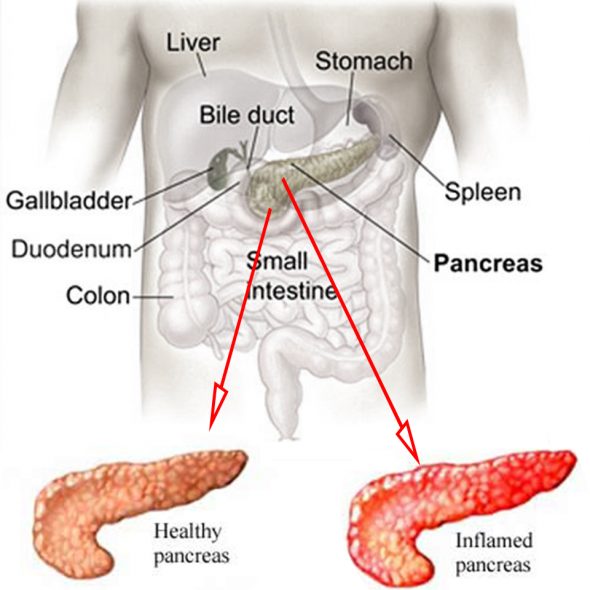
Pancreatitis is inflammation of the pancreas. The initiating event is the premature activation of digestive enzymes, particularly trypsin, within the pancreatic acinar cells rather than in the intestinal lumen. These enzymes mediated pancreatic auto-digestion and trigger inflammation. Acute pancreatitis accounts for an estimated 200,000 to 275,000 hospital admissions annually in the United States. Approximately 80% of patients have mild disease and 20% have severe disease. The overall mortality rate is 1% to 2%. The recurrence rate ranges from 0.6% to 5.6%, with the highest rates occurring in alcohol-related cases.
The etiology of acute pancreatitis includes:
- Alcohol consumption – 2 liters of beer or 800 mL of wine per day
- Biliary tract stones – especially if female, >50 years of age, ALP >300, ALT >100, Amylase>4000, bilirbuin >3 mg/dL
- Medications
- ACE inhibitors
- HIV antiviral therapy
- Chemotherapy - 6-mercaptopurine
- Valproic acid
- Mesalamine
- Hyperlipidemia – triglycerides >1000 mg/dL
- Infections – Mumps, Coxsackie virus, Mycoplasma pneumoniae
Gallstones are the most common cause, followed by prolonged use of alcohol. Medications appear to cause less than 5% of all cases of acute pancreatitis. Often, the cause of pancreatitis cannot be established. A number of potential factors might contribute to unexplained pancreatitis, including genetic polymorphisms. Polymorphisms in a number of genes have been associated with pancreatitis. Examples include mutations in the genes coding for cationic trypsinogen (PRSS1), serine protease inhibitor Kazal type 1 (SPINK1), cystic fibrosis transmembrane conductance regulator (CFTR), chymotrypsin C, calcium-sensing receptor, and claudin-2. These mutations may serve as cofactors, interacting with other causes; for example, claudin-2 mutations work synergistically with alcohol.
Clinically, patients present with sudden epigastric pain that often radiates to their back. It is usually accompanied by nausea and vomiting. The diagnostic criteria of acute pancreatitis include:
- CT or MRI scan consistent with pancreatitis
- Elevated pancreatic enzymes at least 3 times the upper limit of normal
- Abdominal pain consistent with pancreatitis
The American College of Gastroenterology practice guidelines suggest that measuring both serum amylase and serum lipase is not necessary. Serum lipase alone is the preferred test for diagnosing pancreatitis because it is more sensitive than amylase and equally specific. The sensitivity of lipase for acute pancreatitis is 96.6% and the specificity is 99.4%. In contrast, the sensitivity of amylase is 78.6% and the specificity is 99.1%. Lipase also increases sooner, and remains elevated longer.
Amylase is not specific for pancreatitis. Alcohol consumption commonly causes elevations <2 x ULN. Other causes of increased amylase include:
- Diabetic ketoacidosis
- Salivary gland inflammation
- Abdominal perforation, infarction and obstruction
- Pancreatic and lung cancer
- Renal insufficiency
- Macroamylasemia
Serum lipase activity increases within 4 to 8 hours after the onset of acute pancreatitis, peaks at 24 hours, and decreases within 8 to 14 days. Lipase levels usually increase from 7 to 11 times the upper limit of normal in acute pancreatitis. Rarely, will lipase stay increased more than 14 days. Prolonged increases signal poor prognosis or the presence of a pancreatic cyst. Initially, the rise in lipase is approximately equal to that of amylase, but after 24 hours lipase has greater clinical sensitivity. Lipase activity remains elevated longer than amylase. Some patients may have elevated lipase and normal amylase activity due to the greater concentration of lipase in the pancreas and its longer serum half-life.
Clinical factors that increase the risk of complications or death among patients with acute pancreatitis include advanced age (≥60 years), numerous and severe coexisting conditions (a score of ≥2 on the Charlson comorbidity index), obesity (body-mass index >30), and long-term, heavy alcohol use. A variety of laboratory measures have also been studied. Hemoconcentration and azotemia indicate intravascular volume depletion due to third-space losses. Elevated C-reactive protein indicates ongoing inflammation. The most useful predictors are elevated blood urea nitrogen and creatinine levels and an elevated hematocrit, particularly if they do not return to the normal range with fluid resuscitation
References
Forsmark CE, Verge SS, Wilcox M, Acute Pancreatitis, N Engl J Med 2016;375:1972-1981.
Aktar A, et al, Measuring both serum amylase and lipase for acute pancreatitis lowers quality and raises cost, Cleve Clin J Med, 201784(9):670-672.
Tenner S, Baillie J, DeWitt J, Vege SS. American College of Gastroenterology guideline: management of acute pancreatitis. Am J Gastroenterol 2013;108:1400-1415
Banks PA, Freeman ML, Practice Parameters Committee of the American College of Gastroenterology. Practice guidelines in acute pancreatitis. Am J Gastroenterol, 2006; 101:2379–2400.
Working Group IAP/APA Acute Pancreatitis Guidelines. IAP/APA evidence-based guidelines for the management of acute pancreatitis. Pancreatology 2013;13:Suppl 2:e1-15
Smith RC, Southwell-Keely J, Chesher D. Should serum pancreatic lipase replace serum amylase as a biomarker of acute pancreatitis? ANZ J Surg, 2005;75:399–404.



 How to resolve AdBlock issue?