

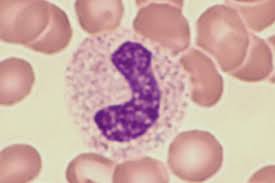
Enumeration of band neutrophils has long been a mainstay in the laboratory diagnosis of bacterial infection. However, the introduction of modern hematology analyzers has heralded their demise. Modern automated hematology instruments provide an accurate and precise 5-part differential count, which includes the absolute neutrophil count. A band count always requires a manual differential count, a procedure which is not only labor-intensive, but also inaccurate and imprecise, and for which there is little evidence-based justification.
Elevation of the band count is not specific for infection, but may be secondary to inflammatory processes, tissue damage or necrosis, neoplasia, intoxication, metabolic abnormalities, hemorrhage, hemolysis or drugs. A band count thus has limited utility in the diagnosis of infection in sick, hospitalized patients who are likely to have bandemia associated with an underlying illnesses or medication.
There are moreover several major technical limitations of the manual band count. The method is inherently inaccurate and imprecise, because of sampling error, statistical imprecision, and subjective problems with band identification. Firstly, leukocytes on a peripheral blood smear are not randomly distributed, with maldistribution problems exacerbated if a blood smear is too thick, leading to considerable sampling error in a band count. Secondly, even with a technically perfect blood smear and faultless cell identification; band percentages obtained from a differential count are extremely imprecise due to obligate statistical variability. The 95% confidence limits for a standard 100-cell differential count are unacceptably wide – for 5% bands the 95% confidence limits are 1% to 12%, for 10% bands the limits are 4% to 18%, and for 15% bands the limits are 8% to 24%. It would be necessary to count 500 cells in each case (a practical impossibility) to decrease these limits by half. This large imprecision of the band count significantly undermines the clinical reliability of the test, and this weakness is compounded by imperfect non-random smears, and cell misidentification.
Perhaps the greatest problem with the band count is the inability to reproducibly identify band neutrophils. The literature contains at least three different definitions of a band neutrophil, leading to widely varying reference ranges. A College of American Pathologists Hematology Resource Committee found that band identification remained a highly variable and subjective process even when laboratories used a uniform illustrated definition. They demonstrated convincingly that bands cannot be reliably and consistently distinguished from segmented neutrophils by human observers.
Numerous studies have investigated the clinical utility of the band count in the discrimination between patients with and without bacterial infection. Most studies of suspected bacterial infection in adults have demonstrated poor performance of the band count as a diagnostic test, with unacceptably low sensitivity and/or specificity. In a study of adults with bacterial infection and normal total white cell counts (WBC), the band count had minimal value for identifying infected patients. In a study of elderly patients with acute sepsis, the band count was not a useful independent predictor of infection. In several studies of patients with suspected acute appendicitis, the band count often showed much lower sensitivity than the total WBC or neutrophil percentage. Only one adult study showed satisfactory sensitivity and specificity for the band count in detecting bacterial infection in patients with diabetic ketoacidosis. The band count is used widely in various established diagnostic algorithms to diagnose bacterial infection in newborns and infants less than three months of age. Some studies have shown high sensitivity for these algorithms in identifying bacterial infection, however other conflicting results have been reported, and the independent contribution of the band count to the performance of these algorithms has not been evaluated.
In conclusion, the band count is a time-consuming, non-specific, inaccurate, and imprecise laboratory test. A review of the literature lends little support for the clinical utility of the band count in patients greater than three months of age. The total WBC and absolute neutrophil count have been repeatedly shown to be much better predictors of bacterial infection, to which the band count adds no additional useful information.
References
Pierre RV, Peripheral blood film review. The demise of the eyecount leukocyte differential. Clin Lab Med 2002 Mar;22:(1)279-97.
Cornbleet PJ, Clinical utility of the band count. Clin Lab Med 2002 Mar;22(1)101-36.
Ardron MJ, Band Neutrophil Counts are Unnecessary for the Diagnosis of Infection in Patients with Normal Total Leukocyte Counts. Amer J Clin Pathol 1994;102(5):646-49.



 How to resolve AdBlock issue?