

Carbamazepine is used to treat all types of partial seizures and generalized tonic-clonic (grand mal) seizures. Brand names include Tegretol and Carbatrol. Generic versions are also available.
Common side effects include drowsiness, headache, dizziness, blurred vision, difficulty in thinking, double vision, diarrhea, nausea and vomiting. Approximately 10% of patients may develop allergic skin rashes.
Asian patients have more than 1,000 times the risk of developing severe cutaneous reaction syndromes (SCARS), which are also known as Stevens-Johnson syndrome and toxic epidermal necrolysis. Complications may include sepsis, multiple organ failure and death.
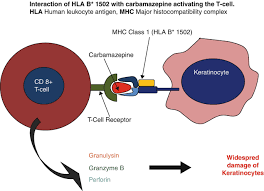
An allele of the human leukocyte antigen B type, HLA-B*15:02, is a genetic marker for carbamazepine induced SCARS in Asians. In December 2007, the FDA changed the prescribing information for carbamazepine to include screening at risk patients for the presence of HLA-B*15:02 prior to initiation of treatment.
HLA-B*15:02 is detected by DNA extraction from whole blood and amplification of the HLA-B*15:02 gene by real time PCR.
Specimen requirement is a lavender top or yellow top tube of blood.
References
Amstutz U, et al. Recommendations for HLA-B*15:02 and HLA-A*31:01 genetic testing to reduce the risk of carbamazepine-induced hypersensitivity reactions. Epilepsia. 2014;55:496-506.
Phillips EJ, et al. Clinical Pharmacogenetics Implementation Consortium guideline for HLA genotype and use of carbamazepine and oxcarbazepine: 2017 Update. Clin Pharmacol Ther. 2018;103(4):574-581.



 How to resolve AdBlock issue?