

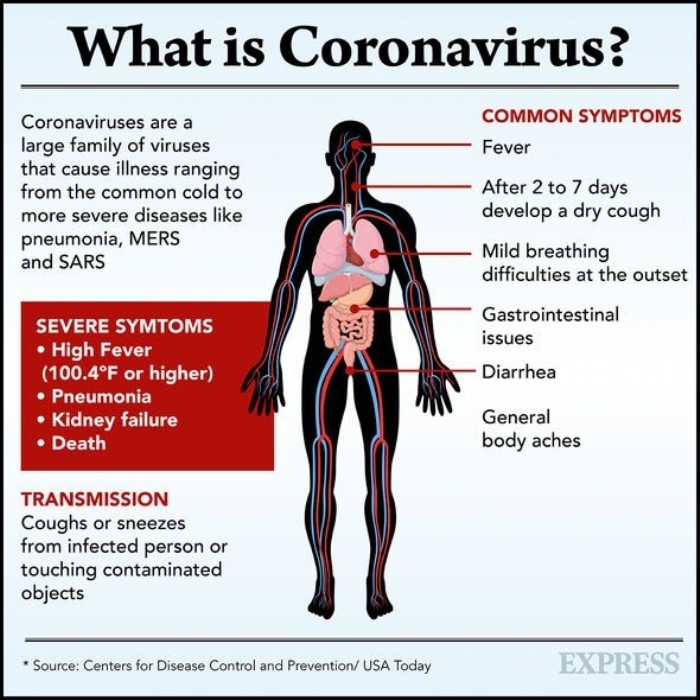
Coronaviruses are a large, diverse group of RNA viruses that affect many animal species. They are named for their spike proteins that resemble the spikes of a crown (corona). Four coronaviruses have circulated in human populations for decades. They are named OC43, 229E, NL63, and HKU1.
Human coronaviruses cause 10% to 15% of common colds. In the United States, most human coronavirus infections occur during fall and winter, but infection throughout the year is possible. Most people become infected with one or more of these coronaviruses during their lifetimes. Many people experience repeated infections, usually with milder symptoms each time.
Human coronaviruses are transmitted through inhalation of respiratory aerosols that are created by an infected person coughing or sneezing. Transmission can also occur by close personal contact with an infected person or direct contact with a contaminated surface and then touching your mouth, nose, or eyes. The incubation time between infection and symptom onset is 2 to 4 days.
In healthy adults, infection typically causes runny nose, cough, sore throat, and low-grade fever. In infants, young children, older adults, and people with weakened immune systems, these viruses can occasionally cause more serious lower respiratory illness, including bronchiolitis or pneumonia.
Patients with mild respiratory illness are usually not tested for coronaviruses. Patients who develop more serious disease can be tested for coronavirus HKU1, NL63, 229E and OC43 using the BioFire FilmArray Respiratory Panel. Specimen requirement is a nasopharyngeal swab placed in 1 mL of transport media.
References
Wat, D. (2004). The common cold: A review of the literature. European Journal of Internal Medicine, 15(2), 79-88.
Van Der Hoek, L. (2007). Human coronaviruses: What do they cause? Antiviral Therapy, 12(4 B), 651-658.
Wevers, B. A., & van der Hoek, L. (2009). Recently Discovered Human Coronaviruses. Clinics in Laboratory Medicine, 29(4), 715-724.
Shah MM, et al. Seasonality of Common Human Coronaviruses, United States, 2014-20211. Emerg Infect Dis. 2022;28(10):1970-1976.
Killerby ME, et al. Human coronavirus circulation in the United States 2014-2017. J Clin Virol. 2018;101:52-56.



 How to resolve AdBlock issue?