

Influenza viruses are spread from person to person primarily through large particle respiratory droplet transmission that requires close contact between source and recipient, because droplets do not remain suspended in the air and generally travel only a short distance of 1 meter or less. The typical incubation period for influenza is 1 to 4 days. Adults can be infectious from the day before symptoms begin until approximately 5 days after illness onset. Young children might shed virus several days before illness onset and remain infectious up to 10 days after onset of symptoms.
Uncomplicated influenza is characterized by the abrupt onset of constitutional and respiratory signs and symptoms such as fever, myalgia, headache malaise, nonproductive cough, sore throat and rhinitis. Uncomplicated illness usually resolves after 3 to 7 days, but cough and malaise can persist for more than 2 weeks. More serious complications include viral pneumonia, encephalopathy, transverse myelitis, myositis, myocarditis, pericarditis and Reye’s syndrome. Influenza infections can also lead to secondary bacterial pneumonia, sinusitis or otitis.
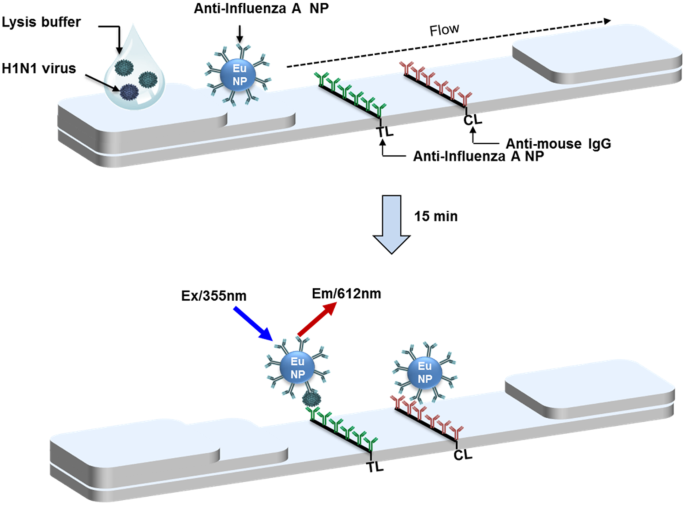
Rapid diagnostic tests for influenza (RIDT) have been used for decades to diagnose and manage patients who present with signs and symptoms compatible with influenza. They also are useful for helping to determine whether outbreaks of respiratory disease, such as in nursing homes and other settings, might be due to influenza.
The reliability of rapid diagnostic tests depends largely on the conditions under which they are used. Sensitivities of RIDT are approximately 50-70%, and specificities are 90-95%, when compared with viral culture or reverse transcription polymerase chain reaction (RT-PCR). False-positive (and true-negative) results are more likely to occur when disease prevalence in the community is low, which is generally at the beginning and end of the influenza season. False-negative (and true-positive) results are more likely to occur when disease prevalence is high in the community, which is typically at the height of the influenza season.
More recently, rapid nucleic acid amplification tests (NAATs) for influenza have become available. Examples include the Alere i Influenza A & B and the Cobas Liat Influenza A/B assay from Roche Diagnostics. Both of these tests are suited for point of care testing because they have CLIA waived status, fast turnaround times, and sensitivities approaching traditional RT-PCR assays.
A systematic review and meta-analysis compared the diagnostic accuracy of these new NAAT tests with traditional rapid tests and conventional RT-PCR. The authors reviewed 162 studies including130 traditional RIDTs, 19 digitally read immunochromatographic immunoassays (DIAs), and 13 NAATs. Most studies included a mixed population of children and adults. The pooled sensitivity for influenza A was 54.4% for RIDTs, 80.0% for DIAs, and 91.6% for NAATs. Sensitivity for influenza B was 53.2% for RIDTs, 76.8% for DIAs, and 95.4% for NAATs. Specificity was consistently high, exceeding 98% for all assays. Digitally read immunochromatographic immunoassays had 25.5% and 23.5% higher sensitivity than traditional RIDTs for diagnosing influenza A and B, respectively. Rapid NAAT sensitivity was superior to that of RIDTs by 37.1% and 41.7% for influenza A and B, respectively, and to that of DIAs by 11.5% and 18.2%. NAATs had similar sensitivity in children and adults.
Clinicians want a confirmed diagnosis of influenza before initiating antiviral therapy. A positive test result for influenza increases the likelihood that a physician will prescribe antiviral medication instead of antibiotics. The new NAATs have sufficient sensitivity and specificity to provide actionable results.
The ideal time to collect respiratory specimens is within 48 to 72 hours after onset of symptoms when the mean viral titers in nasopharyngeal specimens are highest. Because respiratory viruses replicate in the epithelium of the nasopharynx, nasopharyngeal washes or swabs provide more reliable specimens than throat swabs.
Nasopharyngeal swab specimens for rapid influenza testing should be collected on FLOQSwabs (flocked swabs) and submitted in M6 viral transport media. Dry swabs cannot be tested. Nasal washes and aspirates are also acceptable for testing, however bronchoscopy specimens cannot be tested. Specimens should be transported to the laboratory as soon as possible, but can be refrigerated for up to 72 hours prior to testing, if necessary.
Reference value is negative.
Intra-nasal influenza vaccine (FluMist) may give falsely positive results for influenza antigen A and B within the first week after vaccination. Suspected false negative results should be followed by PCR testing, when illness is severe or when otherwise clinically indicated.
References
Ison MG, Contemporary influenza diagnostics: Renewed focus on testing patients. Ann Intern Med. Published online Sep 5, 2017; doi:10.7326/M17-2235.
Merckx J,et al. Diagnostic accuracy of novel and traditional rapid tests for influenza infection compared with reverse transcriptase polymerase chain reaction: A systematic review and meta-analysis. Ann Intern Med. Published online Sep 5, 2017; doi:10.7326/M17-0848 .



 How to resolve AdBlock issue?