

Familial Mediterranean fever (FMF) is a disorder characterized by sporadic, paroxysmal attacks of fever and serosal inflammation. Most patients with FMF experience their first attack in early childhood; in 65% of cases, the initial attack occurs before the age of 10, and in 90% before the age of 20. The typical manifestations of the disease are recurrent attacks of severe pain (due to serositis at one or more sites) and fever, lasting one to three days, and then resolving spontaneously. In between attacks, patients feel entirely well. FMF has been described primarily in several ethnic groups originating in the Mediterranean littoral: Sephardic Jews, Armenians, Turks, North Africans, Arabs, and, less commonly, Greeks and Italians. However, the disease is not restricted to these groups. In the United States, for example, FMF is frequently encountered in Ashkenazi Jews. The diagnosis is usually made on clinical grounds and confirmed by a response to colchicine.
The differential diagnosis includes:
- Surgical emergencies such as appendicitis, intussusception, and perforated peptic ulcer
- Hereditary angioedema
- Acute intermittent porphyria
- Relapsing pancreatitis
- Systemic lupus erythematosus and vasculitis
- Hypertriglyceridemia
- Abdominal epilepsy and abdominal migraine
Acute attacks of FMF are accompanied by elevation of many of the serum markers of systemic inflammation. Leukocytosis with a predominance of neutrophils is common, as is an elevation in the erythrocyte sedimentation rate (ESR) and other acute phase reactants, including beta-2 microglobulin, C-reactive protein (CRP), SAA (serum amyloid protein), and fibrinogen.
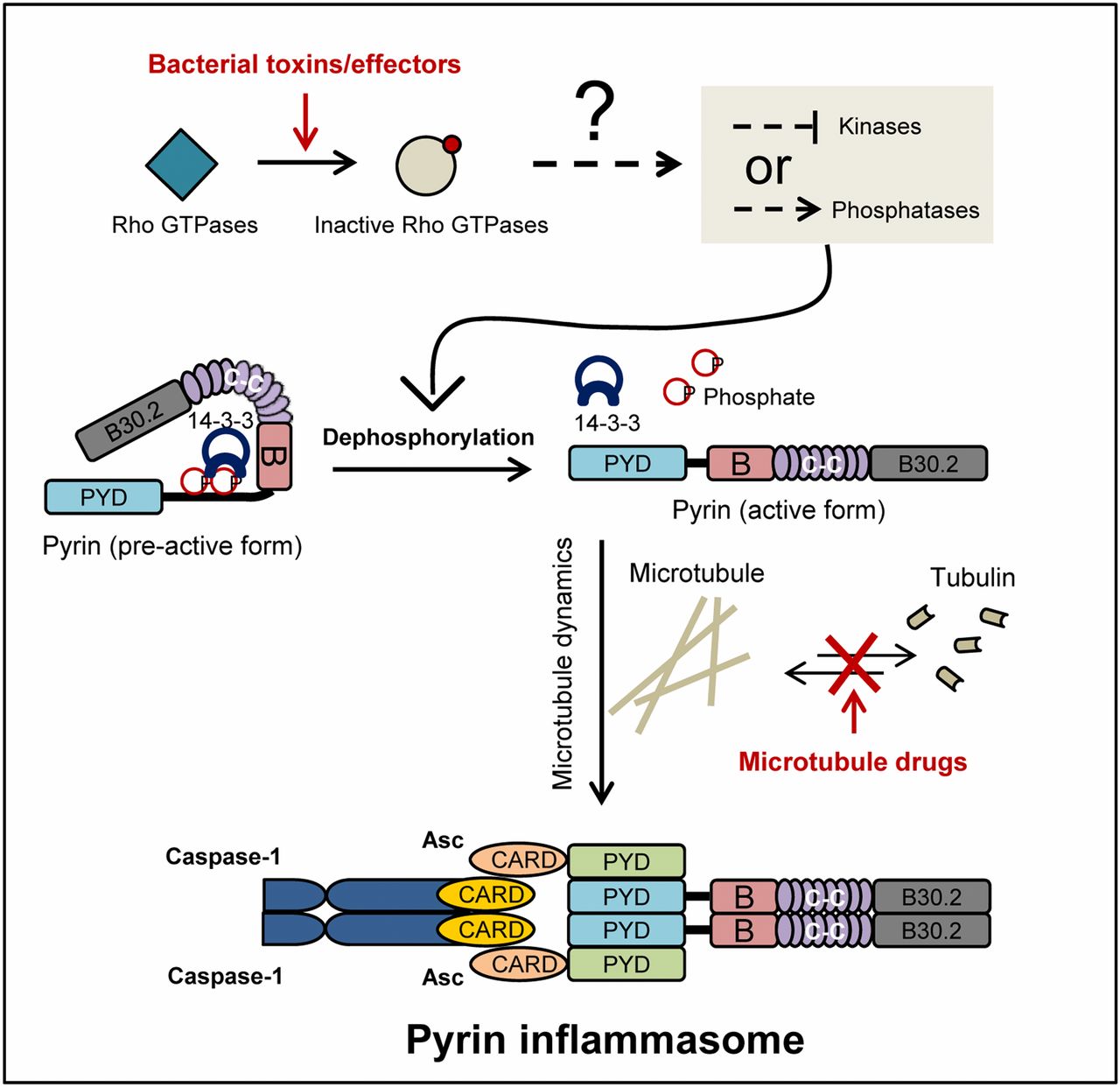
The gene responsible for FMF was discovered in 1997 and is called MEFV. The gene consists of 10 exons and encodes the Pyrin protein. The nromal function of Pyrin is to assist in controlling inflammation by deactivating the immune response.
The majority of missense variants are located within exons 2, 3, 5, and 10. The most frequently observed variants are M694V, M680I, V726A, and M694I in exon 10, as well as E148Q in exon 2.Genetic variants of the MEFV gene are detected by next generation sequencing.
Since FMF is inherited as an autosomal recessive trait, one would expect that two MEFV mutations would be required for clinical disease. However, some patients have only one identifiable mutation and some have no identifiable mutations. Known mutations have not been identified in as many as 45% of patients with clinical FMF in the United States and in 28% of Jewish and Arab children in Israel.
Specimen require is a lavender-top or yellow-top tube of blood. Other acceptable specimens include an Oragene Dx 500 saliva collection kit or a PurFlock buccal swab kit.
References
Shohat M, Halpern G, Familial Mediterranean fever-A review, Genetics in Medicine,2011;13:487-498.
Rehder C, et al. Next-generation sequencing for constitutional variants in the clinical laboratory, 2021 revision: a technical standard of the American College of Medical Genetics and Genomics, Genet Med. 2021;23(8):1399-1415.



 How to resolve AdBlock issue?