

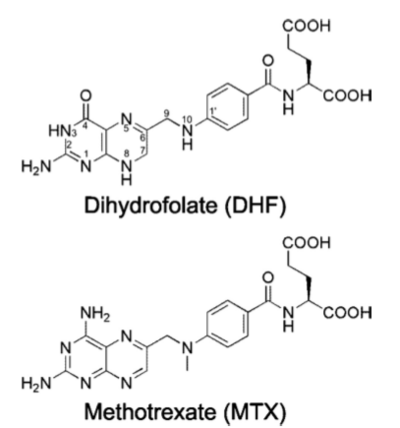
Methotrexate (MTX) is an anti-neoplastic and immunosuppressant medication that inhibits DNA synthesis by inhibiting dihydrofolate reductase and reducing the availability of tetrahydrofolate. The latter compound is needed to methylate pyrimidine nucleotides.
Methotrexate is used in the treatment of severe psoriasis, rheumatoid arthritis, and a variety of malignancies (leukemia, lymphoma, choriocarcinoma, osteogenic sarcoma and carcinomas of the breast, lung and head and neck).
It may be administered orally or intravenously. High dose therapy may be associated with significant toxicity. Therapeutic monitoring is essential to guide the timing and amount of leucovorin (folinic acid) rescue.
The serum concentration of MTX is usually monitored at 24, 48 and, if necessary, 72 hours after a single dose in order to determine the timing of leucovorin rescue. The toxic concentrations at each time point are as follows:
|
Time after Single Dose |
Toxic concentration |
|
24 hours |
>10 umol/L |
|
48 hours |
>1 umol/L |
|
72 hours |
>0.1 umol/L |
MTX is eliminated primarily by the kidneys. ; 70–90% is excreted unchanged. Clearance is reduced in patients with renal disease, ascites, or pleural effusions
Serum levels of methotrexate can be measured by homogeneous enzyme immunoassay or liquid chromatography/tandem mass spectrometry. The therapeutic range is 0.02-5.00 umol/L
One red-top or gel-barrier tube of blood should be drawn at the times specified in the table. Spinal fluid can also be tested.
References
Braun J, Rau R. An update on methotrexate. Curr Opin Rheumatol. 2009 May;21(3):216-23.
Weinblatt ME. Methotrexate: who would have predicted its importance in rheumatoid arthritis? Arthritis Res Ther. 2018 May 30;20(1):103.
Chan ES, Cronstein BN. Methotrexate--how does it really work? Nat Rev Rheumatol. 2010 Mar;6(3):175-8.



 How to resolve AdBlock issue?