

The adult skeleton is continuously undergoing remodeling. Existing bone is resorbed by osteoclasts and replaced with new bone produced by osteoblasts. During skeletal growth, rates of formation exceed resorption resulting in net gain of bone. Later in life, resorption exceeds formation, particularly among estrogen-deficient postmenopausal women and all older individuals. Prolonged bone loss leads to low bone mineral density and eventually osteoporosis. For every 10% of bone that is lost, the risk of fracture doubles.
Biochemical or cellular products produced during either bone resorption or bone formation are called bone turnover markers (BTM). Resorption-specific BTM are breakdown products of type 1 collagen such as N-telopeptide [NTX] and C-telopeptide of type 1 collagen [CTX]). Bone formation-specific markers include those involved in type 1 collagen synthesis (N-terminal propeptide type I procollagen [PINP]), osteoblast enzymes (bone-specific alkaline phosphatase [BAP]), and bone matrix proteins (osteocalcin).
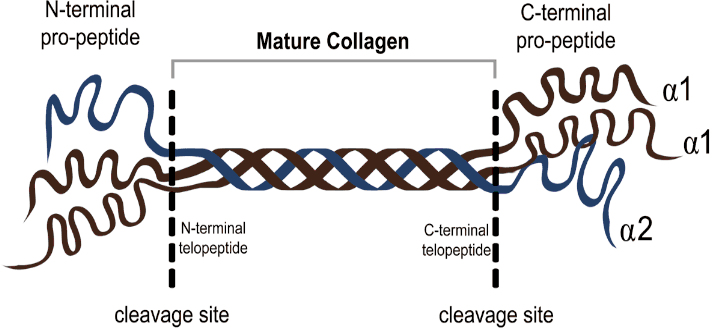
More than 90% of the osteoid matrix of bone consists of type I collagen. Noncollagenous proteins, such as osteocalcin, comprise the remaining 10%. Type 1 collagen is synthesized as procollagen precursor molecules. Prior to insertion into the osteoid matrix, the N and C terminal peptides of procollagen are cleaved and released into the circulation. The N terminal peptide is commonly referred to as N-telopeptide and is one of the most sensitive indicators of bone resorption.
Following initiation of treatment, bone resorption markers can detect early changes much sooner than bone mass density measurements. N-telopeptide levels undergo significant change by 3 months, while changes in spinal bone mass density are noticeable only after 24 months.
A baseline N-telopeptide level should be measured in all patients before beginning anti-resorptive therapy. In general, biphosphonates are administered until N-telopeptide levels fall to 50% of baseline. They are then discontinued and N-telopeptide concentration is measured every 3 months. Treatment is reinstated when the level returns to baseline.
N-Telopeptide is measured by an Ortho Vitros Enhanced hemiluminescent immunoassay. Reference range is 0-62 nM BCE/mM creatinine for adult males, 0-64 nM BCE/mM creatinine for premenopausal women, and 0-89 nM BCE/mM creatinine for postmenopausal women. Results are expressed in bone collage equivalents (BCE).
Specimen requirement is 20 mL of urine.
A working group convened by the International Osteoporosis Foundation and International Foundation for Clinical Chemistry has recommended preferential use of 2 BTMs measured in blood: CTX for resorption and PINP for formation. In the United States, only the CTX automated assay has been approved by the Food and Drug Administration. For more information on bone remodeling tests, see the article entitled: C Termimal Telopeptide of Type 1 Collagen.
References
Bauer DC. Clinical Use of Bone Turnover Markers, JAMA Published Online: July 11, 2019. doi:10.1001/jama.2019.9372
Sweet MG, et al. Diagnosis and treatment of osteoporosis. Am Fam Physician. 2009 Feb 1; 79(3):193-200.
Singer FR, Eyre DR. Using biochemical markers of bone turnover in clinical practice. Cleve Clin J Med. 2008 Oct; 75(10):739-750.



 How to resolve AdBlock issue?