

Newborn screening identifies conditions that can affect a child's long-term health or survival. Early detection, diagnosis, and intervention can prevent death or disability and enable children to reach their full potential.
Every state in the U.S. has a newborn screening program that screens for many serious but treatable congenital diseases. Although each state decides which disorders are included in the screening, the Secretary's Advisory Committee on Heritable Disorders in Newborns and Children (SACHDNC) recommends states test for a core panel of 33 congenital disorders. March of Dimes recommends that all babies are screened for at least 35 medical conditions. Since the symptoms of these serious conditions do not always appear at birth, early detection is lifesaving and enables children to reach their full potential.
Most states use a one-screen model. Babies are screened only once when they are 24 to 48 hours old. Thirteen states use the two-screen model. In this model, all babies are screened at 24 to 48 hours old and screened again at 1 to 2 weeks old. The second screen usually occurs as part of a well baby visit in a pediatrician’s office.
Newborn screening consists of three parts. A hearing test checks for hearing loss. Pulse oximetry is used to screen for congenital heart defects. Blood tests screen for many inborn errors of metabolism.
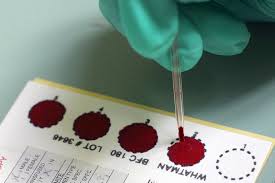
The blood test requires the collection of a few drops of blood from a baby’s heel. Blood drops are absorbed on to special filter paper. Once the blood spots have dried, the card is sent to a laboratory for testing. Results are usually available in 5 to 7 days.
If a screening test result is abnormal, a health care provider will recommend a confirmatory test.
The medical conditions included in most screening programs are divided into six groups.
Organic acid metabolism disorders.
- Propionic acidemia (PROP)
- Methylmalonic acidemia (methylmalonyl-CoA mutase deficiency) (MUT)
- Methylmalonic acidemia (cobalamin disorders) Cbl A, B)
- Isovaleric acidemia (IVA)
- 3-methylcrotonyl-CoA carboxylase deficiency (3-MCC)
- 3-hydroxy-3-methylglutaric aciduria (HMG)
- Holocarboxylase synthase deficiency (MCD)
- Beta-ketothiolase deficiency (BKT)
- Glutaric acidemia type 1 (GA-1)
Fatty acid oxidation disorders.
- Carnitine uptake defect/carnitine transport defect (CUD)
- Medium-chain acyl-CoA dehydrogenase deficiency (MCAD)
- Very long-chain acyl-CoA dehydrogenase deficiency (VLCAD)
- Long-chain L-3 hydroxyacyl-CoA dehydrogenase deficiency (LCHAD)
- Trifunctional protein deficiency (TFP)Amino acid metabolism disorders.
Amino Acid disorders
- Argininosuccinic aciduria (ASA)
- Citrullinemia type 1 (CIT)
- Maple syrup urine disease (MSUD)
- Homocystinuria (HCY)
- Classic phenylketonuria (PKU)
- Tyrosinemia type I (TYR I)
Endocrine disorders.
- Primary congenital hypothyroidism (CH)
- Congenital adrenal hyperplasia (CAH)
Hemoglobin disorders.
- S,S disease (sickle cell anemia) (Hb SS)
- S, beta-thalassemia (Hb S/ßTh)
- S, C disease (Hb S/C)
Other disorders
- Biotinidase deficiency (BIOT)
- Critical congenital heart disease (CCHD)
- Cystic fibrosis (CF)
- Classic galactosemia (GALT)
- Glycogen storage disease type II (Pompe disease) (POMPE)
- Severe combined immunodeficiency (SCID)
- Mucopolysaccharidosis type 1 (MPS I)
- X-linked adrenoleukodystrophy
- Spinal muscular atrophy due to homozygous deletion of exon 7 in SMN1
- Duchenne muscular dystrophy (DMD)
- Metachromatic leukodystrophy (MLD)
References
Health Resources and Services Administration Newborn Screening, https://newbornscreening.hrsa.gov/
March of Dimes Newborn screening tests for your baby, https://www.marchofdimes.org/find-support/topics/parenthood/newborn-screening-tests-your-baby
Weismiller DG, Expanded Newborn Screening: Information and Resources for the Family Physician, Am Fam Physician, 2017;95(11):703-709.



 How to resolve AdBlock issue?