

Before the introduction of rotavirus vaccine in the United States in 2006, rotavirus infection was the leading cause of severe gastroenteritis in children. Approximately 95% of children were infected by age 5 years. Following introduction of the RotaTeq vaccine in 2006 and the Rotarix vaccine in 2008, the prevalence of laboratory confirmed cases of rotavirus has declined by 85%.
Rotavirus disease is seasonal. In the United States, infection most commonly occurs between January and June. Rotavirus is spread through feces. An individual may become infected by touching contaminated surfaces or failing to wash their hands after defecating and then touching their face.
Rotavirus disease is most common in infants and young children. The disease is characterized by the acute onset of vomiting followed 24 to 48 hours later by watery diarrhea. About one-third of patients develop high fevers. Symptoms usually persist for 3 to 8 days. Severe diarrhea can lead to dehydration, electrolyte imbalances, and metabolic acidosis.
Older children and adults can become infected with rotavirus, but usually have milder illness. Rotavirus infections can be a more serious problem in elderly patients living in nursing homes, or other confined quarters. Deaths have occurred due to dehydration, electrolyte imbalances and metabolic acidosis.
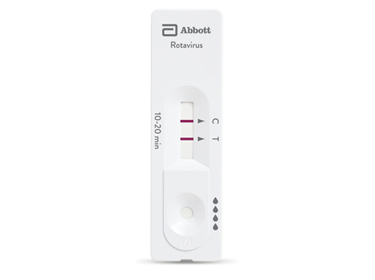
Most patients are diagnosed clinically, but stool tests can confirm the diagnosis. Rotavirus antigen can usually be detected in feces using an enzyme immunoassay or an immunochromatographic assay. Infected children excrete copious amounts of virus for three to five days after the onset of symptoms, making antigen testing reliable. The virus is is usually eliminated from the infected individual by the eighth day. Specimens collected 8 days or more after the onset of symptoms may contain too few viral particles to detect the rotavirus antigen. A prolonged carrier state occurs in some patients. Rotavirus antigen results are reported as positive or negative. Reference value is a negative result.
Rotavirus can also be detected in stool using reverse transcription polymerase chain reaction (RT-PCR). Rotavirus is included in the FilmArray Gastrointestinal Panel, which is a rapid multiplex assay that detects the most common bacterial, viral, and parasitic enteric pathogens directly from stool specimens. Reference value is a negative result.
Specimen requirement is a one-gram (pea-sized) piece of stool in viral transport media. Stool specimens are preferred over rectal swabs.
References
Hallowell BD, et al. Trends in the Laboratory Detection of Rotavirus Before and After Implementation of Routine Rotavirus Vaccination — United States, 2000–2018. MMWR Morb Mortal Wkly Rep 2019;68:539–543.
Omatola CA, Olaniran AO. Rotaviruses: From pathogenesis to disease control: A critical review. Viruses. 2022;14(5):875.
Crawford SE, Ramani S, Tate JE, et al. Rotavirus infection. Nat Rev Dis Primers. 2017;3:17083.
Parashar UD, Nelson EA, Kang G. Diagnosis, management, and prevention of rotavirus gastroenteritis in children. BMJ. 2013;347:f7204.



 How to resolve AdBlock issue?