

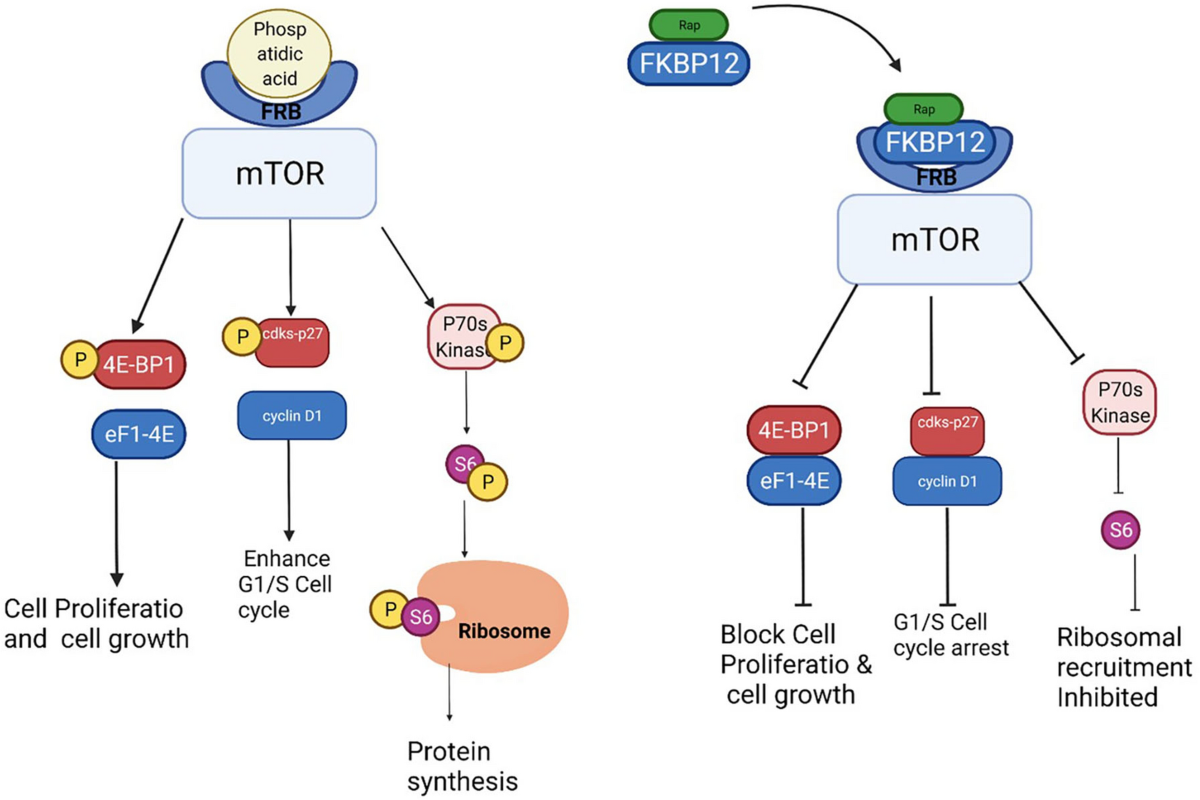
Sirolimus (rapamycin, Rapamune) is a macrolide antibiotic, isolated from Streptomyces hygroscopicus, that suppresses T-and B-cell proliferation. Sirolimus inhibits the protein kinase mTOR and arrests the cell cycle. It has no effects on calcineurin and, therefore, can be used in addition to cyclosporine or tacrolimus. Adverse effects of sirolimus are concentration-dependent, making therapeutic drug monitoring essential.
Preferred therapeutic ranges may vary by transplant type, protocol, and concomitant medications. Most individuals display optimal response to sirolimus with trough whole blood levels 3 to 20 ng/mL. Some patients may require higher trough levels between 20 and 30 ng/mL.
The pharmacokinetic interaction between sirolimus and cyclosporine or tacrolimus increases both therapeutic immunosuppression and the toxicity. Therefore, lower doses are required with combined use. When given with cyclosporine or tacrolimus, the therapeutic range for sirolimus is generally between 4 and 12 ng/dL.
Sirolimus can be measured by immunoassay on an Abbott Architect or by liquid chromatography/tandem mass spectrometry. LC/MS-MS gives results that are approximately 30% lower than by immunoassay.
The recommended therapeutic range applies to trough specimens drawn immediately before a dose. Trough sirolimus concentrations are generally measured every 5 days. Blood drawn at other times will yield higher results.
Specimen requirement is one 5 mL lavender-top (EDTA) tube of blood.
References
MacDonald A, et al. Clinical pharmacokinetics and therapeutic drug monitoring of sirolimus. Clin Ther. 2000; 22(Suppl B):B101-121.
Taylor PJ, Johnson AG. Quantitative analysis of sirolimus (Rapamycin) in blood by high-performance liquid chromatography-electrospray tandem mass spectrometry. J Chromatogr B Biomed Sci Appl. 1998; 718(2):251-257.



 How to resolve AdBlock issue?