

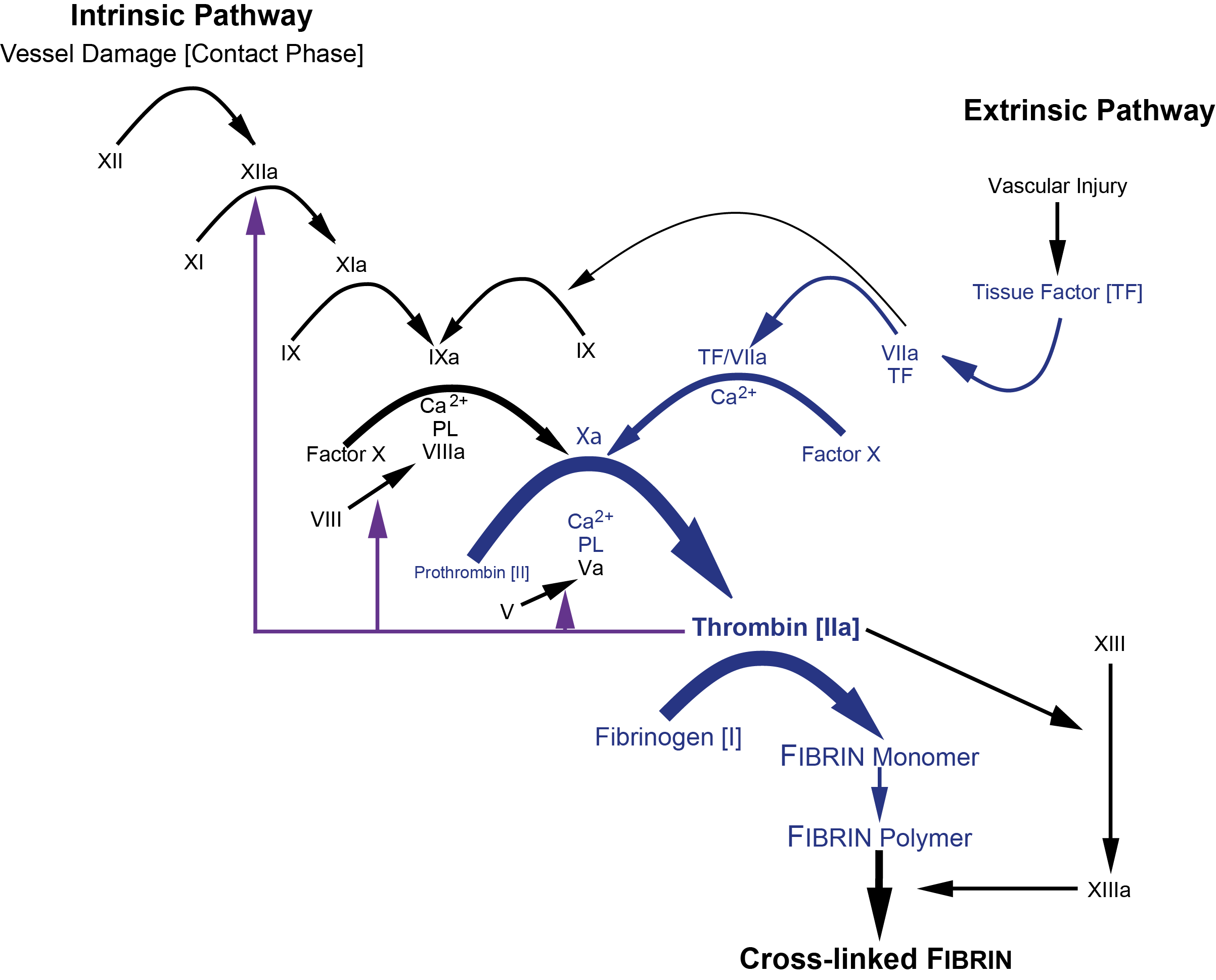
The thrombin time is a measure of time it takes a standard thrombin solution to clot plasma. It is a test of the final step of the coagulation pathway, which involves the conversion of fibrinogen to fibrin.
The thrombin time involves the addition of bovine or human thrombin to citrated platelet poor plasma. The specimen is incubated at 37 degrees C and the time taken for formation of a fibrin clot is recorded.
Prolongation of the thrombin time may be caused by decreased fibrinogen concentration (usually < 90 mg/dL) or production of abnormal fibrinogen molecules (dysfibrinogenemia), such as may be associated with liver disease. The thrombin time may also be prolonged by an inhibitor of the fibrinogen to fibrin step, such as high levels of fibrin degradation products (FDP) that are produced during disseminated intravascular coagulation. FDP interfere with the polymerization of fibrin.
Patients exposed to bovine thrombin may develop antibodies that prolong thrombin times that utilize bovine thrombin. Some of these antibodies may even cross-react with human thrombin. In this situation, a reptilase time can be performed.
Unfractionated heparin prolongs the thrombin time, but therapeutic concentrations of low molecular weight heparin do not. Dabigatran results in very prolonged thrombin times. Apixaban and Rivaroxaban do not.
Thrombin time may also be prolonged in cases of multiple myeloma and macroglobulinemia due to paraprotein inhibition of fibrin polymerization.
Each laboratory establishes its own reference range for the thrombin time. In general, the reference range is in the region of 13-15 seconds.
Specimen requirement is one light blue top (sodium citrate) tube of blood.
References
Gosselin RC, Adcock D, Dorgalaleh A, et al. International Council for Standardization in Haematology Recommendations for Hemostasis Critical Values, Tests, and Reporting. Semin Thromb Hemost. 2020;46(4):398-409.
Mackie I, Casini A, Pieters M, et al. International council for standardisation in haematology recommendations on fibrinogen assays, thrombin clotting time and related tests in the investigation of bleeding disorders. Int J Lab Hematol. 2024;46(1):20-32.



 How to resolve AdBlock issue?