

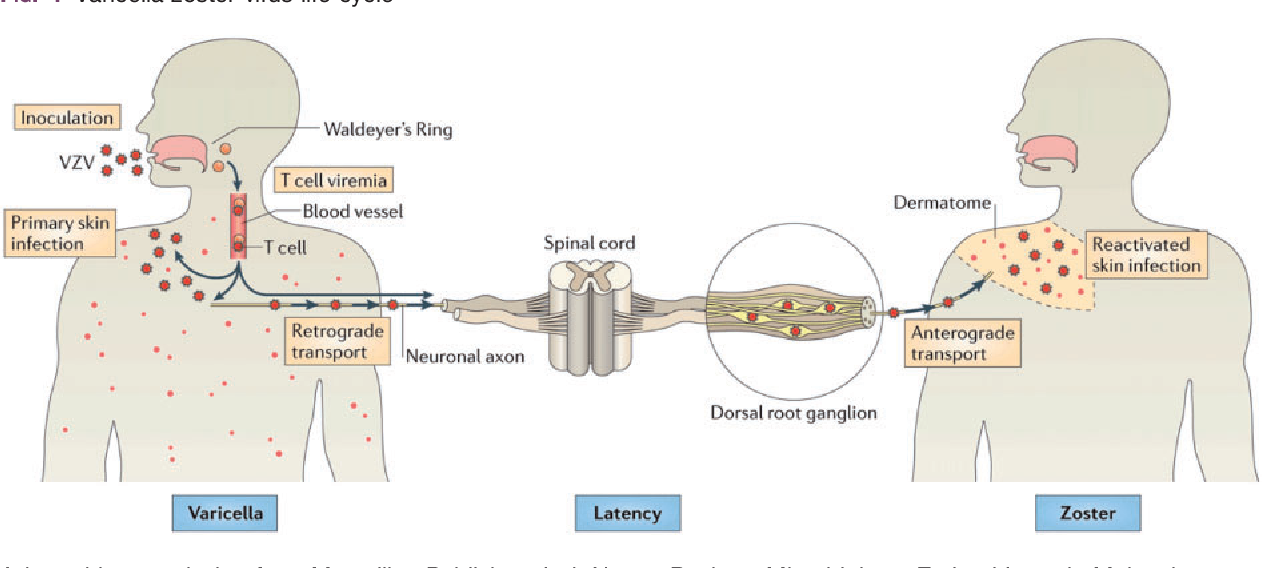
Varicella zoster virus (VZV) is a herpesvirus that causes varicella (chickenpox) and herpes zoster (shingles). Varicella is a common childhood infection that is usually mild n immunocompetent individuals. Transmission occurs via direct contact with vesicle fluid from skin lesions and close contact with aerosolized droplets. The incubation period after exposure ranges from 10 to 21 days. Varicella rash has a central distribution with lesions first appearing on the head, then the trunk, and finally the extremities. The rash evolves through stages of macules, papules, vesicles, pustules, and crusts. All stages of lesions are classically present simultaneously. New vesicle formation continues for 2 to 4 days, accompanied by pruritus, fever, headache, malaise, and anorexia. Symptoms usually last between 4 and 7 days. Individuals with varicella are contagious from 2 days before rash onset until all the lesions have crusted over and no new lesions have appeared for 24 hours.
After primary infection, VZV establishes latency in cells of the dorsal root ganglia. Herpes zoster is caused by reactivation of VZV. Herpes zoster is a localized, painful, vesicular rash involving one or two adjacent dermatomes. The most common sites for herpes zoster are the thoracic dermatomes (40% to 50% of cases), followed by cranial nerve (20% to 25%), cervical (15% to 20%), lumbar (15%), and sacral (5%) dermatomes. The lesions begin with an erythematous maculopapular rash, followed by the appearance of clear vesicles. New vesicle formation typically continues for 3 to 5 days, followed by the formation of pustules and scabs. Crusts typically persist for 2 to 3 weeks. Approximately 10% of people have recurrent herpes zoster within 1 year of the index episode.
Varicella and herpes zoster have a distinctive appearance and usually can be diagnosed clinically. Laboratory tests may be needed in patients with an atypical rash or who are immunocompromised with disseminated disease. Polymerase chain reaction (PCR) of lesions is the most sensitive and specific method for diagnosis of VZV infections. It also has the fastest turnaround times. Swabs of vesicular fluid from a fresh lesion or tissue biopsies can be submitted for PCR.
References
Gershon AA, Gershon MD. Pathogenesis and current approaches to control of varicella-zoster virus infections. Clin Microbiol Rev. 2013;26(4):728-743.
Arvin AM, Varicella-zoster virus, Clin Microbiol Rev,1996;9(3):361-381.
Leung J, Harpaz R, Baughman AL, et al. Evaluation of laboratory methods for diagnosis of varicella. Clin Infect Dis. 2010;51(1):23-32.
Espy MJ, et al. Diagnosis of varicella-zoster virus infections in the clinical laboratory by LightCycler PCR. J Clin Microbiol. 2000;38(9):3187-3189.



 How to resolve AdBlock issue?