

Thiamine is a water-soluble B vitamin, that is also known as vitamin B1. Thiamine is naturally present in some foods, added to some food products, and also available as a dietary supplement. Thiamine is present in whole-grain cereals, peas, beans, nuts, pork, and beef. The recommended intake for adults ranges between 1.0 and 1.5 mg per day.
Most dietary thiamine exists as phosphorylated compounds and intestinal alkaline phosphatases hydrolyzed them to free thiamine before it is absorbed by the small intestine. Most absorption occurs in the proximal jejunum. Small amounts of thiamine (25 to 50 mg) are stored in the liver, heart, brain, kidneys, and skeletal muscle. People require a continuous supply of thiamine because its half-life is short. Thiamine deficiency can begin to occur within 10 days if intake is restricted.
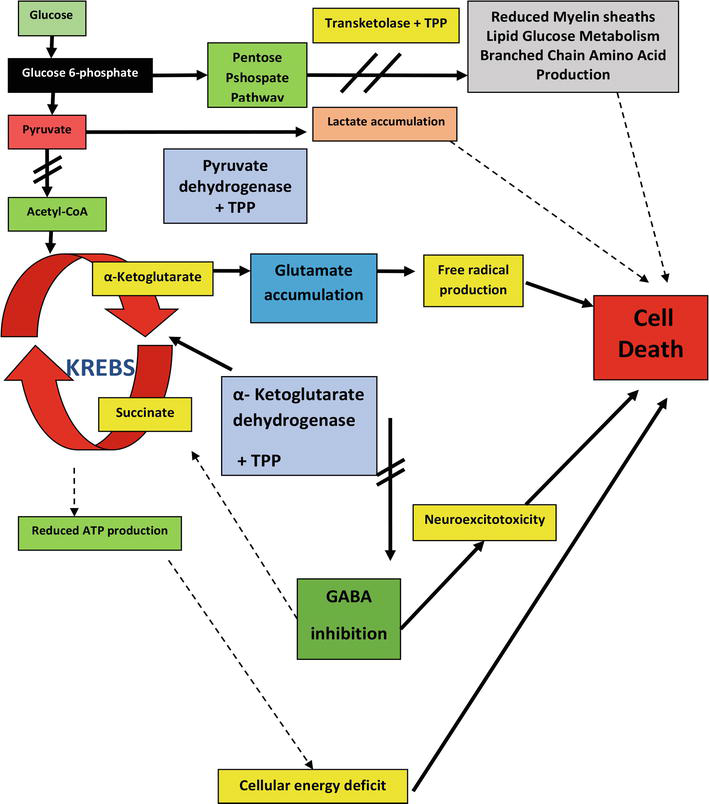
About 80% of thiamine in the adult human body is in the form of thiamine diphosphate (TDP, also known as thiamine pyrophosphate). This is the main metabolically active form of thiamine. Bacteria in the large intestine also synthesize free thiamin and TDP, but their contribution to thiamin nutrition is uncertain. TDP serves as an essential cofactor for five enzymes involved in glucose, amino acid, and lipid metabolism.
Thiamine deficiency can cause beriberi, which is characterized by peripheral neuropathy and wasting. People with beriberi have impaired sensory, motor, and reflex functions. Symptoms include loss of appetite, constipation, muscle weakness, pain or tingling in the extremities, and edema of the lower limbs. Advanced cases lead to congestive heart failure.
A more common manifestation of thiamine deficiency in the United States is Wernicke-Korsakoff syndrome. This disorder is ten times more common in people with chronic alcoholism than the general population. Wernicke's encephalopathy is characterized by the classic triad of mental confusion, oculomotor dysfunction, and gait ataxia. Punctate hemorrhages around the third and fourth ventricles of the brain are characteristic. Thiamine deficiency is most often associated with chronic alcoholism. Other conditions associated with thiamine deficiency include anorexia nervosa, prolonged intravenous feeding without proper supplementation, prolonged fasting or starvation, dialysis, and gastrointestinal surgery. Wernicke's encephalopathy is a well known complication of bariatric surgery and typically occurs 4 to 12 weeks following surgery.
Laboratory and neuroimaging studies are helpful, but the biggest barrier to diagnosis is a low index of suspicion. Whenever Wernicke's encephalopathy is considered in the differential diagnosis, immediate thiamine replacement should be given. Treatment should not be delayed for diagnostic testing.
Thiamine diphosphate is present predominantly in erythrocytes, with very little occurring in plasma. Measurement of thiamine diphosphate in whole blood by liquid chromatography tandem mass spectrometry is the preferred method for determining nutritional status.
Reference range is 70-180 nmol/L.
Specimen requirement is a lavender top (EDTA) tube of blood. Specimen should be transferred to an amber tube to protect from light and immediately frozen.
References
Thomson AD, Marshall EJ. The natural history and pathophysiology of Wernicke’s Encephalopathy and Korsakoff’s Psychosis. Alcohol Alcohol 2006;41:151-8.
Vognar L, Stoukides J. The role of low plasma thiamin levels in cognitively impaired elderly patients presenting with acute behavioral disturbances. J Am Geriatr Soc 2009;57:2166-8.
Al-Attas OS, et al. Blood thiamine and its phosphate esters as measured by high-performance liquid chromatography: levels and associations in diabetes mellitus patients with varying degrees of microalbuminuria. J Endocrinol Invest 2012;35:951-6



 How to resolve AdBlock issue?