

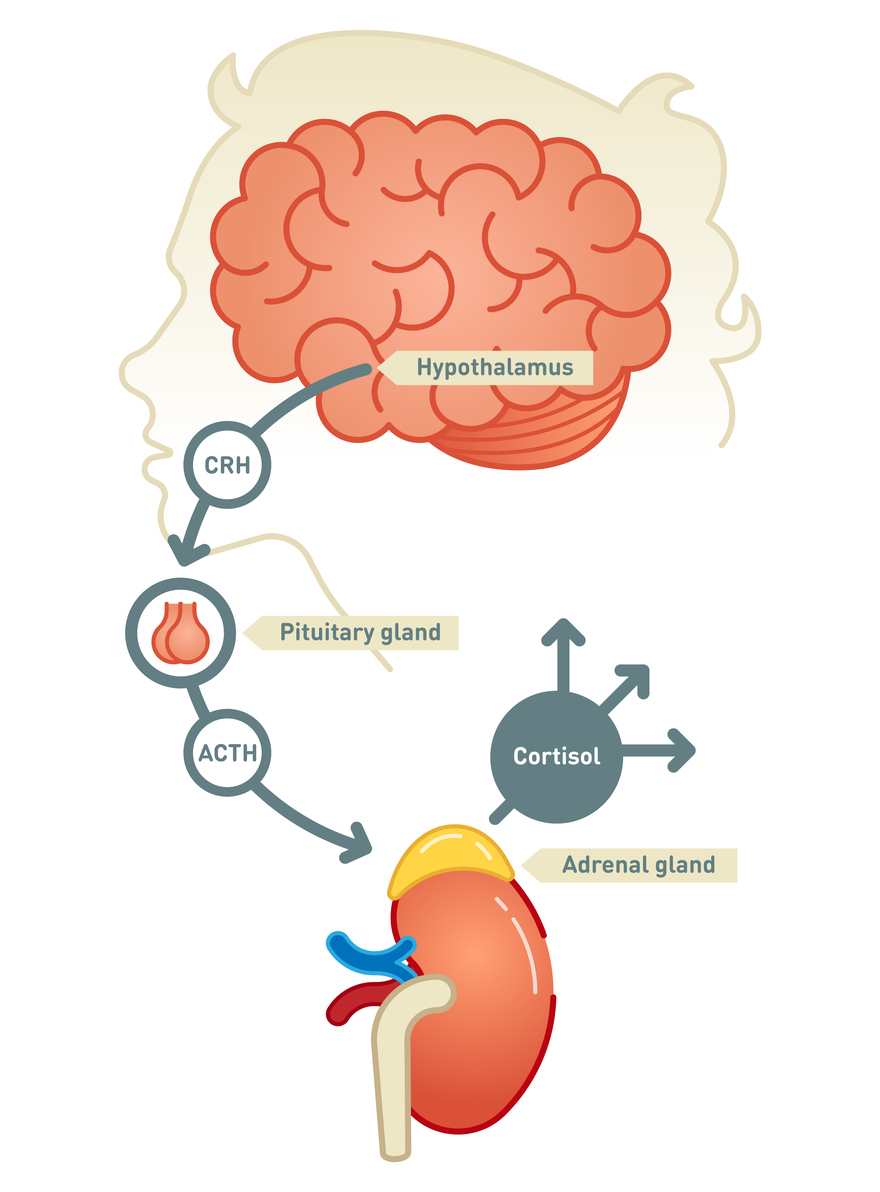
Primary adrenal insufficiency, often called Addison disease, is characterized by deficient production of cortisol, aldosterone, dehydroepiandrosterone, and androstenedione by the adrenal gland. The most common cause of primary adrenal insufficiency is autoimmune adrenalitis, in which the adrenal cortex is disrupted by autoantibodies. Primary adrenal insufficiency can occur alone or in combination with other autoimmune endocrine diseases, that together comprise Type I or Type II autoimmune polyglandular syndrome (APS). Most cases occur between the ages of 20 and 50 years.
More than 90% of patients with primary adrenal insufficiency have circulating autoantibodies to the microsomal enzyme, 21-hydroxylase. Autoantibodies to 21-hydroxylase are the best biomarker of primary adrenal insufficiency, whether it presents alone, or as part of Type I orType II APS.
The absence of these antibodies should lead to evaluation for other, non-autoimmune causes of adrenal insufficiency.
21-hydroxylase autoantibodies are detected by an enzyme immunoassay. Results are reported as negative or positive, Sensitivity is 87% and specificity is 99%.
Reference value is negative. Specimen requirement is a plain red top tube of blood.
Reference
Wolff AB, et al, The natural history of 21-hydroxylase autoantibodies in autoimmune Addison’s disease, Eur J Endocrinol. 2012;184(4):607-615.



 How to resolve AdBlock issue?