

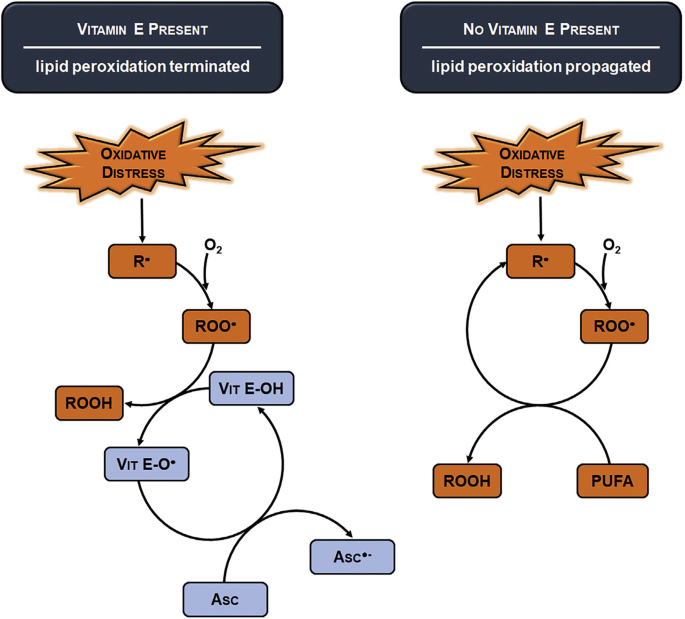
Vitamin E is a tocopherol that functions as an antioxidant, scavenging free radicals. Vitamin E encompasses eight forms, including alpha, beta, gamma, and delta-tocopherol and alpha, beta, gamma, and delta-tocotrienol. Alpha-tocopherol is the predominant fat-soluble antioxidant found in blood and tissues.
As with all fat-soluble vitamins, vitamin E absorption is dependent on fat digestion in the gastrointestinal tract. Fat metabolism involves lipases, bile salts, pancreatic enzymes, and intestinal absorption. Pancreatic enzymes break down tocopheryl-ester bonds. Chylomicrons then transport alpha-tocopherol through the lymphatic system to the liver. In hepatocytes, alpha-tocopherol is released from chylomicrons and bound to alpha-tocopherol binding protein. This complex is incorporated into lipoproteins, secreted into the bloodstream, and transported to extra-hepatic tissues. Alpha-tocopherol prevents the oxidation of lipid membranes, low density lipoprotein, and retinol.
As with all vitamins, the body does not produce vitamin E. Foods rich in vitamin E include vegetable oils (canola and olive oils), nuts, and seeds. Meats, dairy, leafy greens, and fortified cereals also have vitamin E. The recommended daily amount of vitamin E for adults is 15 mg per day.
Most people get sufficient vitamin E from a balanced diet, so vitamin E supplements are usually not recommended. The results of randomized controlled trials have not supported taking vitamin E supplements to prevent cardiovascular disease, cancer, or cataracts.
Diseases that interfere with fat malabsorption are the most common causes of vitamin E deficiency. Examples include cholestatic liver disease, biliary cholangitis, sclerosing cholangitis, pancreatic insufficiency, and small intestinal resection or disease. Ataxia with vitamin E deficiency (AVED) is a genetic disease caused by a mutation in the alpha-tocopherol transport protein.
Deficiency of Vitamin E in adults and children causes reversible neuropathy, retinopathy, and hemolysis. Neuropathy can cause gait disturbance and loss of proprioceptive and vibratory sense. Red blood cell lifespan is shortened in people with chronic vitamin E deficiency, leading to hemolysis.
High doses of supplemental vitamin E can interfere with vitamin K absorption and inhibit platelet aggregation, increasing the risk of bleeding. Vitamin E supplementation has also been associated with an increased risk of prostate cancer.
Vitamin E is measured in serum by liquid chromatography tandem mass spectrometry. The adult reference range is 5.5-17.0 mg/L.
Vitamin E levels below 5.5 mg/L are considered deficient. Levels greater than 40 mg/L indicate excessive vitamin E.
Specimen requirement is a red top tube of blood. Patient should be fasting overnight to prevent falsely elevated concentrations.
References
Traber MG. Human Vitamin E deficiency, and what is and is not Vitamin E? Free Radic Biol Med. 2024;213:285-292.
Traber MG. Vitamin E and K interactions--a 50-year-old problem. Nutr Rev. 2008;66(11):624-629.
Clarke MW, Burnett JR, Croft KD. Vitamin E in human health and disease. Crit Rev Clin Lab Sci. 2008;45(5):417-450.
O'Connor EA, et al. Vitamin and mineral supplements for the primary prevention of cardiovascular disease and cancer: updated evidence report and systematic review for the US Preventive Services Task Force. JAMA. 2022;327(23):2334-2347.
US Preventive Services Task Force, Mangione CM, Barry MJ, et al. Vitamin, mineral, and multivitamin supplementation to prevent cardiovascular disease and cancer: US Preventive Services Task Force recommendation statement. JAMA. 2022;327(23):2326-2333.



 How to resolve AdBlock issue?