

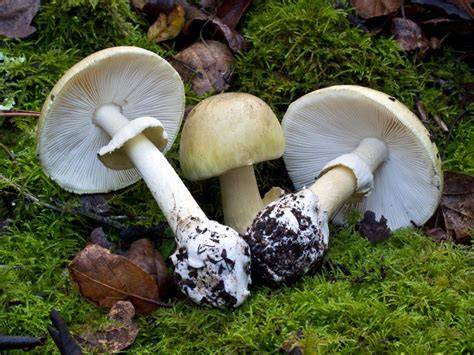
The genus Amanita contains approximately 600 species of mushrooms, including some that are poisonous. Foraging for mushrooms is a major risk factor because poisonous mushrooms are difficult to distinguish visually from nonpoisonous, edible mushrooms.
The species that causes the most deaths is Amanita phalloides, colloquially known as the death cap mushroom. Amanita Phalloides is endemic to Europe and is believed to have entered the United States in contaminated soil. Amanita ocreata is also poisonous and is native throughout California.
Amanita phalloides and Amanita Ocreata contain amatoxin, which is a cyclic octapeptide. Amatoxins are heat stable and are not inactivated by cooking or other means of food preparation. A lethal dose can be as low as 0.1 mg/kg of body weight. A single mushroom can contain up to 15 mg. Once ingested, amatoxin is readily absorbed from the gastrointestinal tract into the portal circulation where it is taken up by hepatocytes. Amatoxin binds to DNA-dependent RNA polymerase (II) and inhibits protein synthesis, ultimately resulting in hepatocyte death and fulminant hepatic failure. Amatoxin is eliminated by the kidneys.
The clinical course of amatoxin poisoning occurs in three phases:
- Delayed onset of abdominal pain, nausea, vomiting and diarrhea, often occurring within 6 hours of ingestion.
- The second phase occurs 12 to 36 hours after ingestion and is characterized by laboratory evidence of liver injury, coagulopathy, and acute kidney injury.
- The third phase occurs 2 to 6 days after ingestion and includes fulminant hepatic and renal failure.
Early identification and treatment are critical for improved outcomes. However, Amanita toxicity can be missed if a history of mushroom ingestion is not identified. Patients who are evaluated early in the course of their illness might be discharged home only to return later with indications of liver failure. The case fatality rate is 10% to 20%.
Many laboratory tests become abnormal after ingestion of amatoxin. Liver enzymes begin to rise 24 to 36 hours after ingestion. Progressive liver disease results in elevated bilirubin, prothrombin time, and ammonia. Development of hepatorenal syndrome is accompanied by acidosis, hypoglycemia and renal failure. Vomiting and diarrhea cause electrolyte abnormalities. Analysis of specific mycotoxins is not usually available quickly enough to be clinically valuable.
Despite the severity and potential lethality of amatoxin-containing mushroom poisoning, no standardized treatment regimens are available, and no Food and Drug Administration (FDA)-approved therapies exist. Because amatoxin is eliminated by the kidneys, aggressive IV hydration is recommended. A variety of therapies including biliary drainage, multi-dose activated charcoal, high-dose penicillin, N-acetylcysteine, polymixin B, octreotide, and silibinin have been attempted with no definitive evidence of efficacy. In the event of irreversible fulminant liver failure, liver transplant might be required.
References
- Wieland T, Wieland O. Chemistry and toxicology of the toxins of Amanita phalloides Pharmacol Rev 1959;11:87–107. PubMed
- Wieland T. The toxic peptides from Amanita mushrooms. Int J Pept Protein Res 1983;22:257–76. CrossRef PubMed
- Olson KR, Pond SM, Seward J, Healey K, Woo OF, Becker CE. Amanita phalloides-type mushroom poisoning. West J Med 1982;137:282–9. PubMed
- Vo KT et al. Amanita phalloides Mushroom Poisonings – Northern California, December 2016, MMWR June 2, 2017;66:549-53.
- Brandecker KJ, et al. Amanita Species Mushroom Poisonings — Northern California, November 2025–March 2026. MMWR Morb Mortal Wkly Rep 2026;75:258–263.



 How to resolve AdBlock issue?