

Heparin is a negatively charged mucopolysaccharide extracted from either bovine lung or porcine intestinal mucosa for pharmacological use as an anticoagulant. Unfractionated heparin (UFH) therapy must be monitored because the response can vary considerably from patient to patient. Traditionally, UFH therapy has been monitored using the activated partial thromboplastin time (aPTT) and dose adjustments were made based on the aPTT according to a heparin dosing protocol. However, the correlation between aPTT and heparin levels was imperfect. Heparin assays based on either protamine titration or anti-factor Xa activity are more accurate, but are not widely used in the US due to perceived lack of availability and cost.
A study of 268 patients comparing UFH therapy monitoring by either the aPTT or by an anti-factor Xa heparin assays showed that the number of monitoring tests and dosage changes were significantly less in the heparin assay group as compared to the aPTT group (Rosborough). Another study showed a marked decrease in the time to achieving therapeutic anticoagulation (from a mean of 63 h to a mean of 34 h) by using anti-factor Xa heparin for monitoring, as compared to historical controls that used aPTT for monitoring (Baird).
Therapeutic monitoring for low molecular weight heparin (LMWH) is not routinely recommended. However, under certain circumstances, such as impaired renal function and extreme obesity, monitoring LMWH therapy may be appropriate. In these patients, specimens for monitoring should be drawn 4 hours after the last dose, if a standard twice daily dosing regimen is being used.
Results of the heparin anti-factor Xa assay are reported in IU/mL with the following interpretive comments:
- Therapeutic range for unfractionated heparin: 0.3-0.7 IU/ml
- Therapeutic range for Enoxaparin (Lovenox) is 0.6-1.0 IU/ml for twice daily dosing and greater than 1.00 IU/mL for once daily dosing
- Therapeutic range for Dalteparin (Fragmin) is 1.05 IU/mL for once daily dosing
- Therapeutic range for Tinzaparin (Innhep) is 0.85 IU/mL for once daily dosing
- Critical value is 1.1 IU/ml for UFH (for non-cardiac patients).
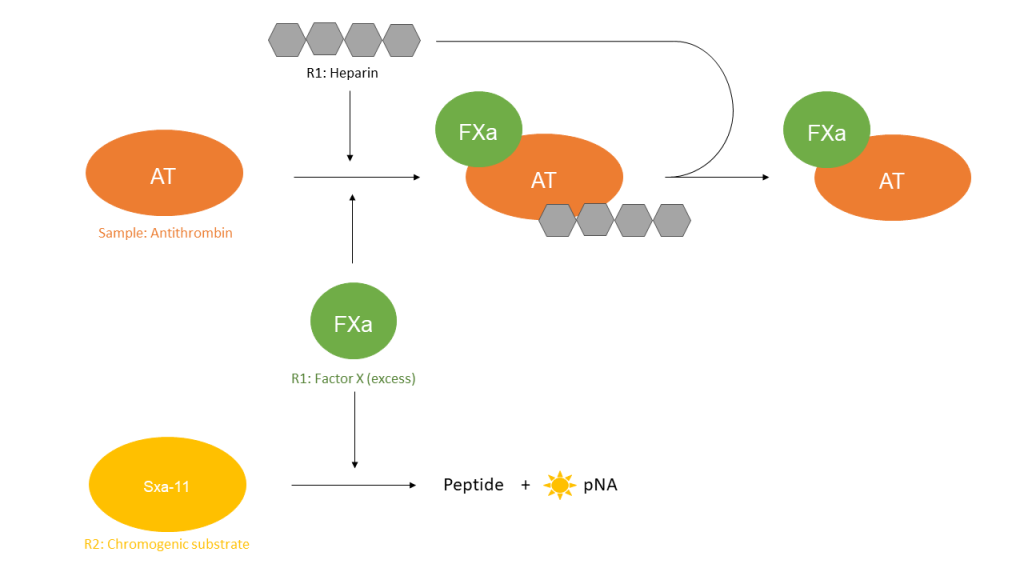
The heparin anti-Xa assay is based on the ability of heparin to inhibit the activity of activated factor X (Xa) in the reagent. The reagent includes excess antithrombin, making heparin in the sample the rate-limiting reagent for Xa inhibition. Heparin in the patient sample inhibits the enzymatic conversion of a Xa-specific chromogenic substrate to colored product by factor Xa. Standard curves are created using multiple concentrations of UFH and LMWH and are used to calculate concentration in the patient plasma.
Specimen requirement is one light blue top (citrate) tube. To avoid tissue fluid contamination a 5mL plain red top tube should be drawn first and discarded. The specimen should be delivered to the laboratory within two hours of collection. If transportation will be delayed the tube should be centrifuged for 10 minutes at 2500 g and the plasma transferred to a plastic tube. The plasma should be centrifuged again to make certain the plasma does not contain any platelets. The supernatant should be transferred to a screw capped plastic vial and frozen.
References
Rosborough TK. Monitoring unfractionated heparin therapy with antifactor Xa activity results in fewer monitoring tests and dosage changes than monitoring with the activated partial thromboplastin time. Pharmacotherapy. 1999;19(6):760-6.
Baird, R. W. (2001). Quality Improvement Efforts in the Intensive Care Unit: Development of a New Heparin Protocol. Baylor University Medical Center Proceedings, 14(3), 294–296.



 How to resolve AdBlock issue?