

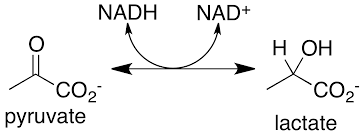
Lactic dehydrogenase (LD) catalyzes the conversion of lactate to pyruvate and is present in high concentrations in the cytoplasm of almost all cells. Since LD is found in every tissue in the body, the diagnostic value of an elevated level without additional laboratory investigation is limited. Diseases of most organs including myocardial infarction, hepatic necrosis, skeletal muscle disease, renal disease, pulmonary infarction, malignancy, megaloblastic anemia, and hemolysis increase serum levels of LD. In liver disease, AST and ALT are usually much more elevated than LD. LD is no longer recommended for evaluation of acute myocardial infarction. It has been replaced by troponin.
The circulating half-life of cardiac LD is about three days, while the half-life of LD released from skeletal muscle and liver is about ten hours.
Heparin therapy can elevate serum LD. Specimens that are not promptly centrifuged will have slightly elevated LD levels, due to leakage from red blood cells. Usually these specimens also have decreased glucose. Hemolysis results in more significant increases. Ascorbic acid can decrease LD values.
The adult reference range is 120-225 IU/mL.
Specimen requirement is one red-top, gel barrier, or green-top tube of blood.
References
Tietz NW. Clinical Guide to Laboratory Tests. 4th ed. Philadelphia, Pa: WB Saunders Co; 2006.
Panteghini M, Bais R: Serum enzymes. In: Rifai N, Horvath AR, Wittwer CT, eds. Tietz Textbook of Clinical Chemistry and Molecular Diagnostics. 6th ed. Elsevier; 2018:407-431



 How to resolve AdBlock issue?