

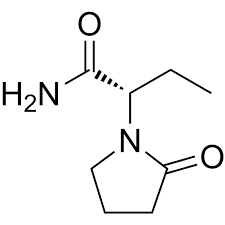
Levetiracetam (Keppra) is a widely used antiepileptic drug that can be administered orally and intravenously. It has predictable pharmacokinetics, does not bind plasma proteins and has very few drug-drug interactions because it is not metabolized by the liver. Levetiracetam is cleared by renal excretion. The elimination half life is 6 to 8 hours in healthy adults, six hours in children, and 10 to 11 hours in the elderly. In patients with normal renal function, 95% of Levetiracetam is excreted in the urine.
A single 1,000 mg dose produces a peak plasma level of 31 ug/mL, while the same dose twice daily produces a peak level of 43 ug/mL.
Common adverse effects include fatigue, irritability, mood changes, loss of coordination. Therapeutic drug monitoring is indicated for adjusting dosage in pregnant women and patients with renal insufficiency. Levetiracetam is measured by immunoassay. The therapeutic range is 10-40 ug/mL.
Specimen requirement is a red top tube of blood. Serum should be separated as quickly as possible after collection to prevent hydrolysis.
References
Patsalos PN. Pharmacokinetic profile of levetiracetam: Toward ideal characteristics. Pharm Ther. 2000 Feb; 85(2):77-85.



 How to resolve AdBlock issue?