

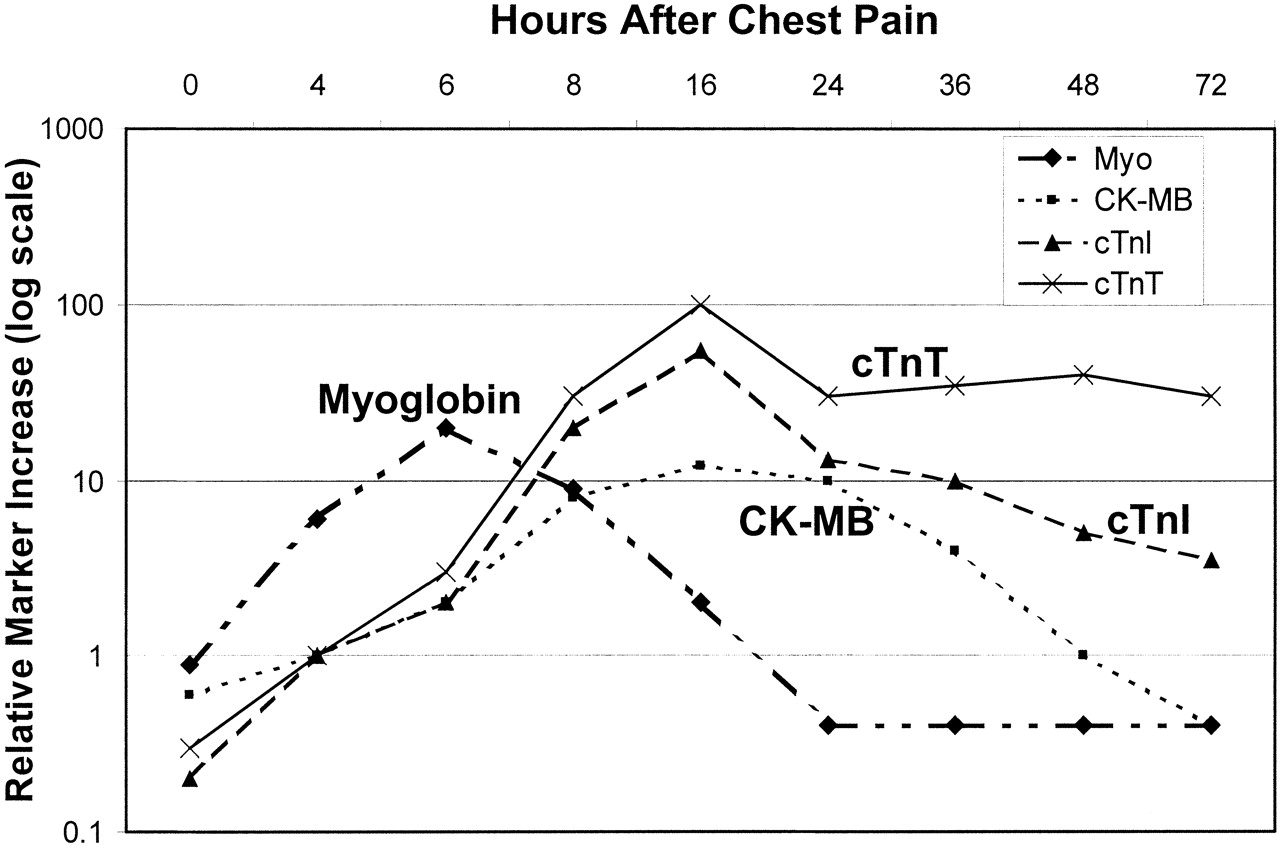
Myoglobin is an oxygen carrying heme protein present in high concentrations in the cytoplasm of cardiac and skeletal muscle. Myoglobin has a molecular weight of 18,000 and constitutes 2% of total muscle protein. Because of its low molecular weight and high cellular concentration, elevated blood levels can theoretically be detected prior to other cardiac markers of ischemic injury. Increases may be seen within 2 hours after the onset of chest pain. Peak levels up to10 times the upper limit of normal are reached in 6 to 9 hours. Serum levels return to normal within 24 to 36 hours after infarction. False negative results may occur if myoglobin levels are measured <2 hours before or >24 hours after infarction. A positive myoglobin result within 2 to 12 hours after onset of chest pain needs confirmation, but a negative test is valuable in ruling out acute myocardial infarction.
Because myoglobin is present in both skeletal and cardiac muscle, elevated serum levels are not specific for acute myocardial infarction. Elevated serum levels occur after exercise and intramuscular injections. Patients with skeletal muscle damage, renal failure, or shock have elevated levels. Serum creatinine levels needed to be measured simultaneously to rule out false positives secondary to renal failure.
Many of the early claims for increased myoglobin sensitivity were based on a comparison with CKMB measured by electrophoresis. The introduction of CKMB mass assays, troponin, and high sensitivity troponin made serum myoglobin an obsolete test for detection of acute myocardial infarction. Most laboratories have discontinued serum myoglobin testing.
References
Lippi G, Plebani M, Serum myoglobin immunoassays: obsolete or clinically useful? Clin Chem Lab Med,2016;54(10):1541-1543.
Wu AHB, et al, Antiquated Tests within the Clinical Pathology Laboratory, Amer J Managed Care,2010;16(9):e220-e227.
Morrow DA, et al, National Academy of Clinical Biochemistry Laboratory Medicine Practice Guidelines: Clinical Characteristics and Utilization of Biochemical Markers in Acute Coronary Syndromes, Circulation,2007;115(13):e357-e371.



 How to resolve AdBlock issue?