

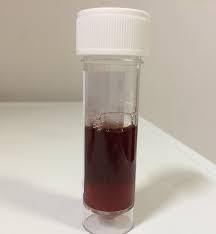
Myoglobin is an oxygen carrying heme protein present in high concentrations in the cytoplasm of cardiac and skeletal muscle. Myoglobin has a molecular weight of 18,000 and constitutes 2% of total muscle protein. Small amounts of myoglobin are cleared from the plasma in one to six hours and metabolized to bilirubin. When plasma myoglobin levels exceed 1.5 mg/dL, it is excreted by the kidney.
Rhabdomyolysis is defined as an acute increase in plasma concentrations of creatinine kinase to more than 5 times the upper limit of normal in the absence of a myocardial infarction. High concentrations of myoglobin are released into the plasma during muscle injury. Visible myoglobinuria (tea or cola colored urine) occurs when urinary myoglobin exceeds 250 ug/mL. This concentration corresponds to the destruction of more than 100 grams of skeletal muscle.
The major causes of myoglobinuria include skeletal muscle trauma, excessive muscle use, primary skeletal muscle diseases, hyperpyrexia, seizures, and gangrene. Some insect and snakebites can also cause myoglobinuria. The most common drugs causing myoglobinuria are alcohol, cocaine, amphetamines, opiates, phencyclidine, neuroleptics, and statins.
Patients with skeletal muscle injury also have elevated serum CK, AST, LD, uric acid, potassium and creatinine levels. Creatine kinase levels may exceed 100,000 IU/L. Serum calcium is often decreased due to calcium binding by damaged muscle proteins and phosphate. Acute renal failure results from renal vasoconstriction, intraluminal myoglobin cast formation, and heme protein nephrotoxicity.
Myoglobinuria can be inferred by a positive urine dipstick test for heme, in the absence of red blood cells on microscopic examination of urine sediment. Urine myoglobin can be confirmed by nephelometry. Reference range is 0-2 ug/mL.
Specimen requirement is 5 mL of a random urine collection.
References
Karina Rodríguez-Capote,et al, Utility of Urine Myoglobin for the Prediction of Acute Renal Failure in Patients with Suspected Rhabdomyolysis: A Systematic Review, Clinical Chemistry, 2009;55(12):2190–2197.
Feinfeld DA, et al. A prospective study of urine and serum myoglobin levels in patients with acute rhabdomyolysis, Clin Nephrol,1992;38(4):193-195.
David WS, Myoglobinuria, Neurol Clinics, 2000;18(1):215-243.



 How to resolve AdBlock issue?