

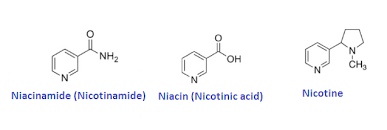
Niacin is a water-soluble vitamin that is also referred to as vitamin B3. Niacin (vitamin B3) is widely distributed in plant and animal foods. Good sources include yeast, meat, liver, cereals, legumes, and seeds. The major dietary forms of niacin are nicotinamide adenine dinucleotide (NAD) and NAD phosphate (NADP). NAD and NADP are hydrolyzed intestinal enzymes into nicotinamide, which is converted by intestinal flora to nicotinic acid. Nicotinamide and nicotinic acid are then absorbed from the intestine, released into the circulation, and rapidly taken up by the liver, kidneys, and erythrocytes.Intracellular nicotinamide and nicotinic acid are converted back to NAD and NADP. Many enzymatic reactions depend upon NAD and NADP, which function as coenzymes.
Niacin deficiency predisposes to pellagra. The most characteristic finding is the presence of a symmetric hyper-pigmented rash on sun exposed areas of skin. Other clinical findings include red tongue, diarrhea and vomiting. Neurologic symptoms include insomnia, anxiety, disorientation, delusions, dementia, and encephalopathy.
Pellagra is now extremely uncommon in the western world except as a complication of alcoholism, anorexia nervosa, or malabsorption. Pellagra due to dietary deficiency still occurs in some regions of India, China, and Africa. Niacin deficiency can accompany carcinoid syndrome because tryptophan is metabolized to 5 OH-tryptophan instead of nicotinic acid. Several drugs can lead to niacin deficiency including isoniazid, 5-fluorouracil, pyrazinamide, 6-mercaptopurine, hydantoin, ethionamide, phenobarbital, azathioprine, and chloramphenicol.
Nicotinic acid and nicotinamide are measured by liquid chromatography tandem mass spectrometry. Reference ranges 0-5 ng/mL for nicotinic acid and 5-50 ng/mL for nicotinamide.
Specimen requirement is a lavender-top (EDTA) tube of blood. Plasma should be separated within 30 minutes of collection, protected from light and immediately frozen.
References
Maiese K, et al. The vitamin nicotinamide: Translating nutrition into clinical care. Molecules. 2009; 14(9):3446-3485.
Park YK, et al. Effectiveness of food fortification in the United States: The case of pellagra. Am J Public Health. 2000; 90(5):727-738.
Delgado-Sanchez L, Godkar D, Niranjan S: Pellagra. Rekindling of an old flame. Am J Ther. 2008;15(2):173-175.



 How to resolve AdBlock issue?