

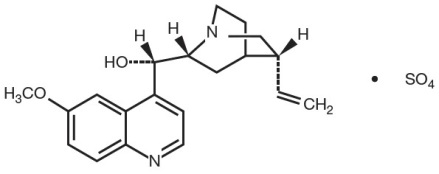
Quinidine is the oldest primary antiarrhythmic drug in clinical practice. Its major uses are to maintain sinus rhythm after conversion of atrial flutter or fibrillation, to prevent ventricular tachycardia, and for long-term prophylaxis in patients with AV nodal reentrant tachycardia and automatic atrial tachycardia.
Quinidine is often preferred to procainamide for long-term therapy because of procainamide increases the risk of developing antinuclear antibody antibodies and drug-induced lupus.
Quinidine is usually administered orally and absorbed in the small intestine. About 80% of the quinidine in plasma is protein bound. The liver extensively metabolizes quinidine and only 20% of parent drug is excreted unchanged in the urine.
The most common side effects are diarrhea, headache, palpitations, rash and tremor. The major toxic effects are ventricular arrhythmias, hypotension, vomiting, diarrhea, and tinnitus. Hepatic disorders, renal failure and cardiac failure elevate plasma levels. Hyperkalemia increases the effects of quinidine. A synergistic interaction exists between quinidine and digoxin.
Measurement of serum quinidine level is useful to confirm suspected toxicity, adjust the current dose, and assess patient compliance. The circulating half-life is 6 to 8 hours. Steady state levels are reached two days after oral dosing. The recommended sampling time for a trough level is 4 to 6 hours after the last dose.
Quinidine is measured by Kinetic Interaction of Microparticles in Solution (KIMS). Therapeutic range (trough level) is 2.0-5.0 ug/mL. Levels >6.0 ug/mL are considered critical values.
Specimen requirement is one plain red top tube. SST tubes are not acceptable.
Reference
Montamat SC, Cusack BJ, Vestal RE. Management of drug therapy in the elderly. N Engl J Med, 1989; 321(5):303-309.



 How to resolve AdBlock issue?