

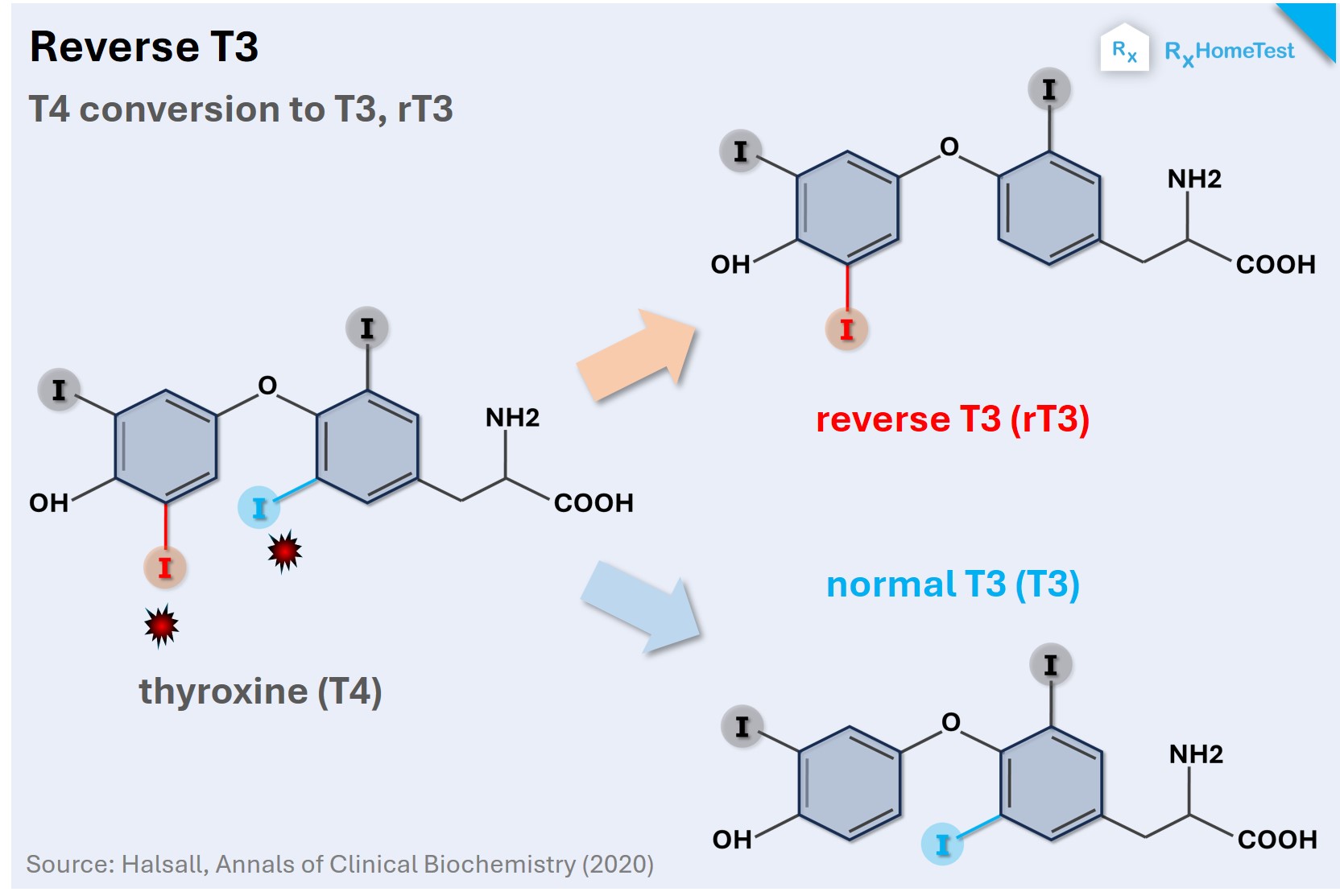
Triiodothyronine (T3) is a thyroid hormone that is created by deiodination of thyroxine (T4) by type 1 and type 3 deiodinase enzymes. T3 reverse is a biologically inactive form of T3 that is produced inside the cells of other tissues from the breakdown of T4. High concentrations of T3 reverse may block T3 binding to the thyroid hormone receptor.
Approximately 15% of patients on L-T4 replacement therapy, who have a normalized thyroid-stimulating hormone (TSH) concentration, report continued fatigue and other hypothyroid symptoms.
Decades ago, endocrinologists realized that in patients with severe illnesses, T3 reverse is typically high and T3 is typically low. This phenomenon was termed the euthyroid sick syndrome. More recently, functional medicine and other doctors, have claimed that high T3 reverse can block T3 from binding to the thyroid hormone receptor. These patients are often prescribed L-T3 only preparations to lower T3 reverse levels.
A review of medical articles about this topic showed that 90% were published before 2000 and provided limited evidence to support measuring T3 reverse for evaluation of regular thyroid disorders like hypothyroidism and hyperthyroidism.
Plasma rT3 concentration is measured by liquid chromatography/tandem mass spectrometry (LC/MS-MS). The adult reference range is 10-24 ng/dL.
Specimen requirement is a red-top or red-top gel barrier tube of blood.
References
Wilson JB, et al, Reverse T3 in patients with hypothyroidism on different thyroid hormone replacement, PLoS One, 2025;20(6):e0325046.
Schmidt RL et al. Does reverse triiodothyronine testing have clinical utility? An analysis of practice variation based on order data from a national reference laboratory. Thyroid 2018; 28(7): 842-848.



 How to resolve AdBlock issue?