

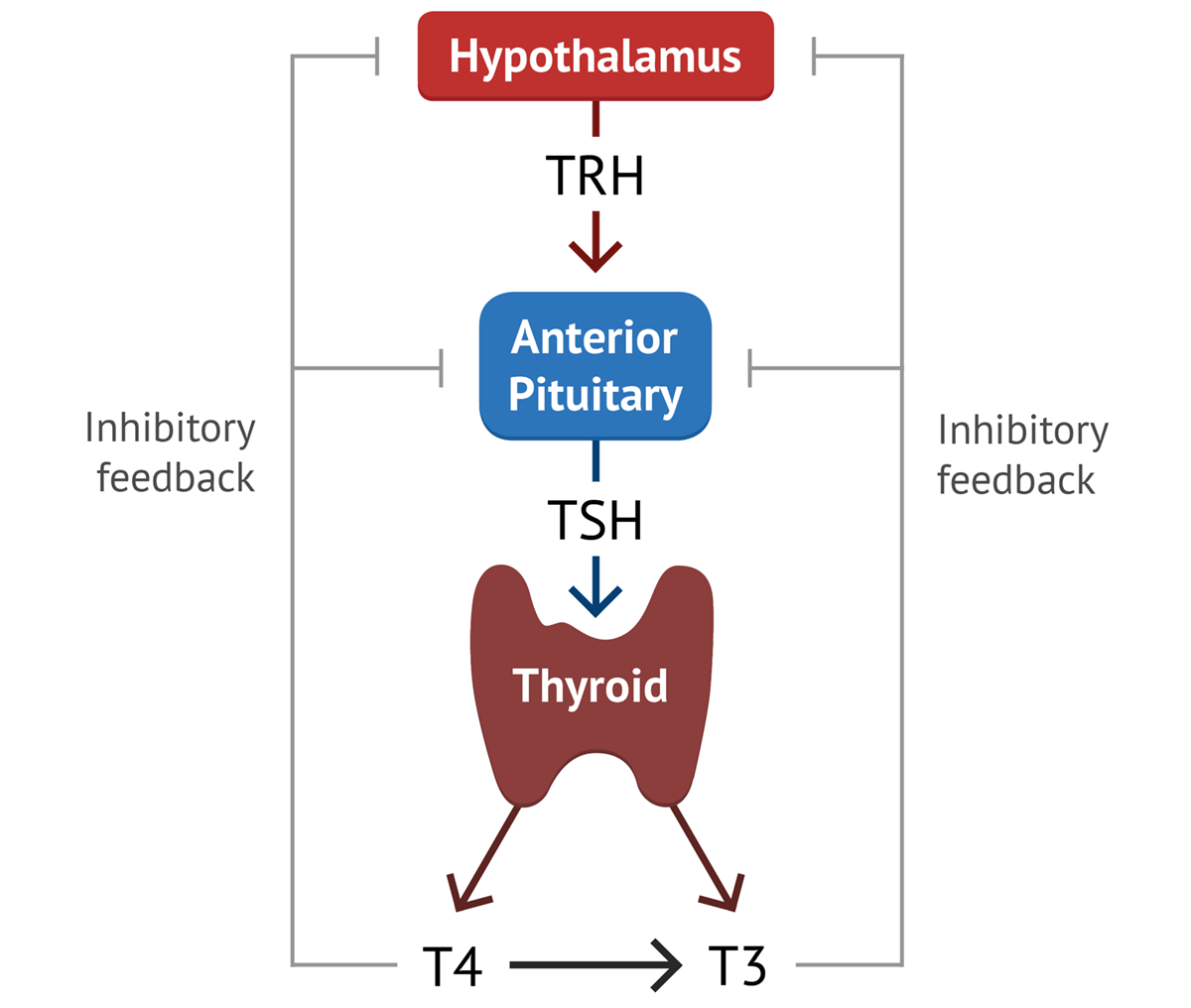
Thyrotropin releasing hormone (TRH), a hypothalamic peptide, stimulates the anterior pituitary to synthesize and secrete thyroid stimulating hormone (TSH). TSH stimulates the release of triiodothyronine (T3) and thyroxine (T4) from thyroglobulin and their secretion by the thyroid. T4 and T3are secreted in a ratio of 10:1.
In peripheral tissues T4 is converted to T3, which is the active hormone that migrates into the target cell nuclei and binds to DNA. Approximately 80% of circulating T3 is derived from the peripheral conversion of T4 and 20% from direct thyroid secretion. Most circulating T3 and T4 are protein bound. Only the free fractions are metabolically active.
Primary hypothyroidism is the most common thyroid disorder. In this condition, the thyroid fails to respond to TSH. The pituitary secretes more TSH in response to decreasing circulating T4 concentrations. The failing thyroid gland partially compensates by increasing the ratio of secreted T3 to T4 If this last attempt to restore homeostasis fails, the patient’s metabolic rate falls. At this stage of hypothyroidism, TSH is elevated and T4 and free T4 are decreased.
The opposite condition, hyperthyroidism or thyrotoxicosis, is caused by too much circulating T4. Graves’s disease, an autoimmune disorder caused by antibody to TSH receptors, leads to uncontrolled release of T4 and T3, which suppress circulating TSH. Serum T4, FT4, T3, and FT3 concentrations are elevated two to three times above the upper limit of normal and TSH is undetectable.
Occasionally, T3 is the only hormone increased in hyperthyroidism. This condition is called T3 thyrotoxicosis. The major clinical reason to measure T3 is to identify patients with T3 thyrotoxicosis. T3 measurements are not needed for the diagnosis of hypothyroidism.
T3 levels are decreased in patients with severe systemic illnesses. Therefore, a patient with hyperthyroidism and other major diseases may have minimally increased, normal, or decreased T3 concentration. Approximately 3% of patients receiving the antiarrhythmic drug, amiodarone, become thyrotoxic. Most of these patients have elevated T3 levels.
T3 is measured by a competitive chemiluminescent immunoassay. Reference ranges are age dependent. The adult reference range is 80-200 ng/dL.
Specimen requirement is one red-top gel barrier tube of blood.
References
Klee G, Clinical usage recommendations and analytic performance goals for total and free triiodothyronine measurements. Clin Chem. 1996;42(1):155-159.
Bethune JE. Interpretation of thyroid function tests. Dis Mon. 1989 Aug; 35(8):541-595.
Takamatsu J, Kuma K, Mozai T. Serum tri-iodothyronine to thyroxine ratio: A newly recognized predictor of the outcome of hyperthyroidism due to Graves' disease. J Clin Endocrinol Metab. 1986; 62(5):980-983.



 How to resolve AdBlock issue?