

Riboflavin is also called Vitamin B2. It is naturally present in some foods, added to some food products, and available as a dietary supplement. Riboflavin is an essential component of two major coenzymes, flavin mononucleotide (FMN) and flavin adenine dinucleotide (FAD). These coenzymes play major roles in energy production; cellular function, growth, and development; and metabolism of fats, drugs, and steroids. The conversion of the amino acid tryptophan to niacin (vitamin B3) requires FAD. Similarly, the conversion of vitamin B6 to the coenzyme pyridoxal 5’-phosphate needs FMN.
More than 90% of dietary riboflavin is in the form of FAD or FMN; the remaining 10% is comprised of free riboflavin and glycosides or esters. Most riboflavin is absorbed in the proximal small intestine. Bacteria in the large intestine produce free riboflavin that can be absorbed by the large intestine. More riboflavin is produced after ingestion of vegetable-based than meat-based foods. The body stores only small amounts of riboflavin in the liver, heart, and kidneys. When excess amounts are consumed, they are either not absorbed or the small amount that is absorbed is excreted in urine.
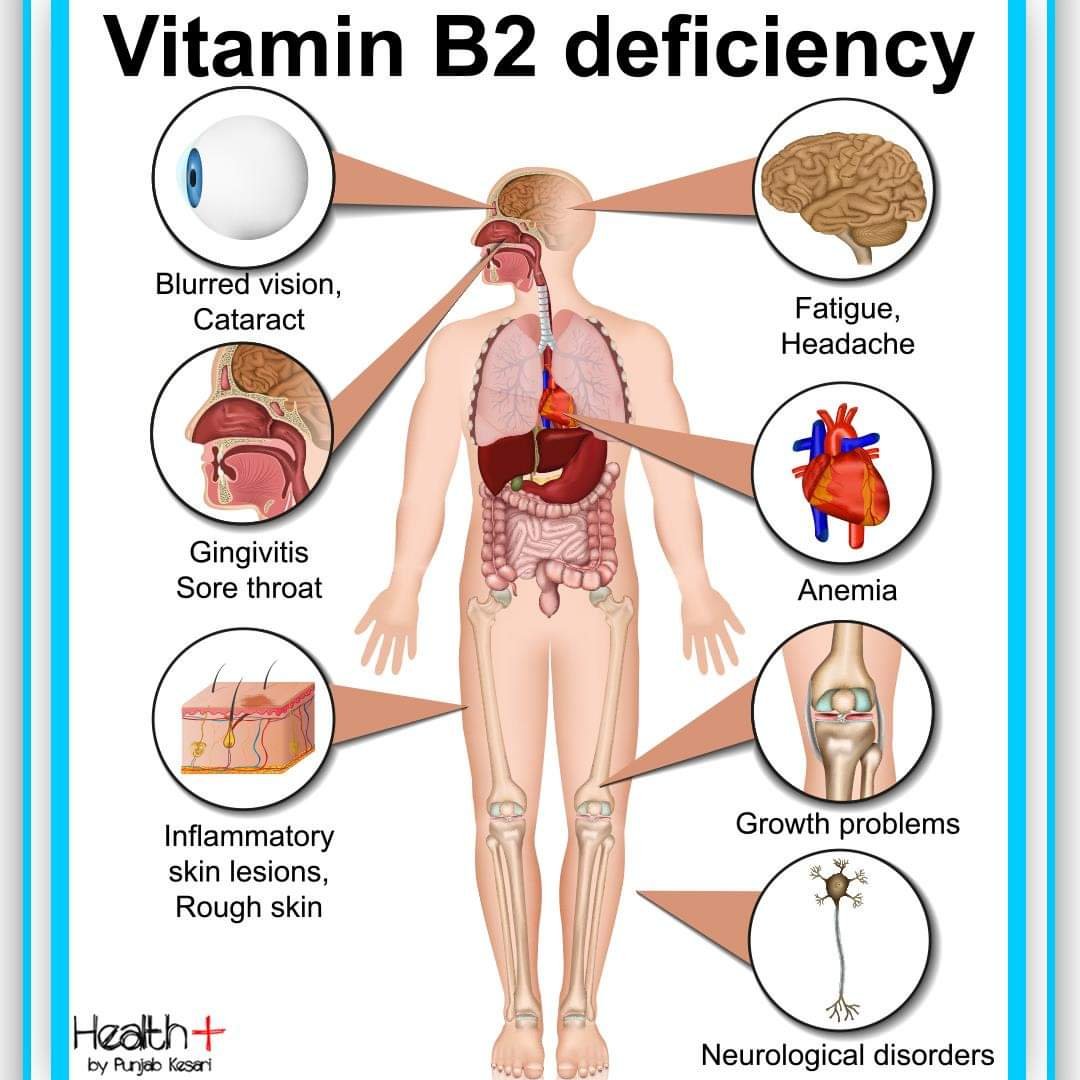
Riboflavin deficiency is called ariboflavinosis and is primarily caused by reduced dietary intake. Symptoms include sore throat, cheilosis, angular stomatitis, glossitis, corneal vascularization, dermatitis, and normocytic, normochromic anemia.
Riboflavin is quantitated in plasma using high performance liquid chromatography and tandem mass spectrometry. Reference interval is 1-19 ug/L. Low concentrations in plasma indicate nutritional deficiency. Concentration below 1 ug/L indicates severe deficiency.
Testing of non-fasting specimens or the use of dietary vitamin B2 supplementation can result in elevated plasma vitamin B2 concentrations.
Specimen requirement is a green top tube of blood. Specimen should be immediately centrifuged and the plasma transferred to an amber vial to protect from sunlight. It should be immediately frozen.
References
Hustad S, et al. Riboflavin, flavin mononucleotide, and flavin adenine dinucleotide in human plasma and erythrocytes at baseline and after low-dose riboflavin supplementation. Clin Chem. 2002;48(9):1571-1577.
Balasubramaniam S, Christodoulou J, Rahman S. Disorders of riboflavin metabolism. J Inherit Metab Dis. 2019;42(4):608-619.
Powers HJ, et al. Correcting a marginal riboflavin deficiency improves hematologic status in young women in the United Kingdom (RIBOFEM). Am J Clin Nutr 2011;93:1274-84.



 How to resolve AdBlock issue?