

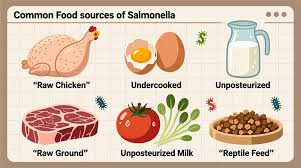
Salmonella enterica is a gram negative, flagellated facultatively anaerobic bacilli. It is a leading cause of bacterial food-borne illness in the United States. Infection is commonly associated with consumption of contaminated meat, produce, and eggs. Other high-risk food items include dairy products, precooked foods held warm, soups, stews, gravies, sauces, deli meats, sliced ready-to-eat meats, hot dogs, seafood and shellfish, sushi and raw fish products, cut melons, cut tomatoes, cut leafy greens, raw sprouts, prepared salads, and garnishes.
Salmonella in ingested food survive passage through the stomach and invade the mucosa of the small and large intestines. They produce toxins that cause an inflammatory reaction that leads to diarrhea. Salmonella can spread from the intestines into the bloodstream to cause systemic disease.
Salmonellosis is a bacterial infection commonly manifested by acute enterocolitis with sudden onset of headache, abdominal pain, diarrhea, nausea and sometimes, vomiting. Fever is almost always present.
Onset typically occurs within 12 to 36 hours after consuming a contaminated food or beverage, but can range from 6 to 72 hours. Longer incubation periods of up to 16 days have been documented. The illness usually lasts 4 to 7 days and most people recover without antibiotic treatment. The elderly, infants, and those with impaired immune systems may develop a more serious illness, requiring hospitalization.
The elderly, infants and those with impaired immune systems may have a more serious illness. In these patients, the infection may spread from the intestines to the blood stream; and then to other body sites and can cause death unless the person is treated promptly with antibiotics.
Salmonella is detected by culture of a fecal specimen that is inoculated onto hektoen enteric agar and the enrichment broth, selenite F. Following incubation, suspect Salmonella colonies are identified using one or a combination of the following techniques: matrix-assisted laser desorption/ionization time of flight mass spectrometry (MALDI-TOF), conventional biochemical tests, carbon source utilization, serologic methods, and/or nucleic acid sequencing of the 16S ribosomal RNA gene.
Salmonella species are also detected by the FilmArray Gastrointestinal Panel that is based on polymerase chain reaction (PCR). This test detects salmonella species but does not differentiate Salmonella enterica and Salmonella bongori.
Specimen requirement is 1 gram or 5 mL of feces placed in transport media.
References
CDC. Salmonella infection (salmonellosis). Atlanta, GA: US Department of Health and Human Services, CDC; 2023. https://www.cdc.gov/salmonella/
Scallan E, et al. Foodborne illness acquired in the United States—major pathogens. Emerg Infect Dis 2011;17:7–15. https://doi.org/10.3201/eid1701.P11101



 How to resolve AdBlock issue?