

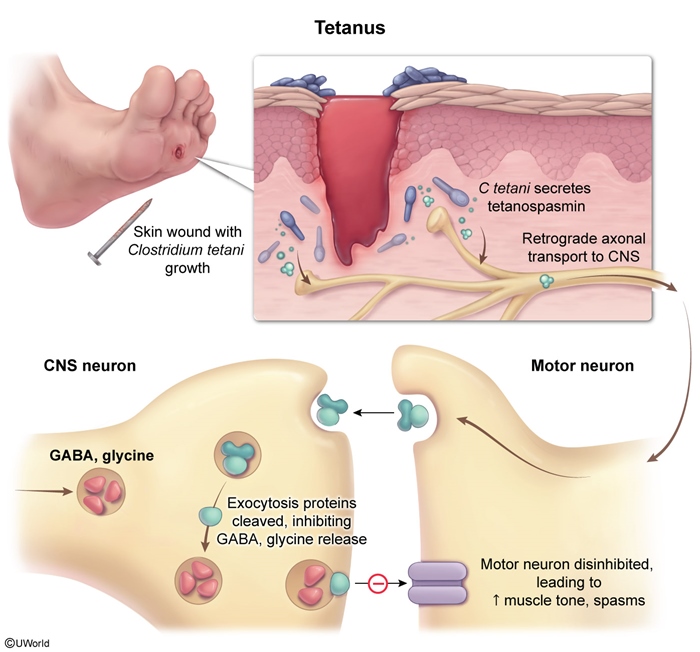
Tetanus is a serious vaccine-preventable disease caused by the toxin produced by Clostridium tetani, which is a spore-forming bacterium that is ubiquitous in the environment. Humans become infected when wounds contact spores in soil, dust, and feces. Most tetanus cases occur between April and October. Tetanus is a serious and life-threatening disease. Ninety-five percent of patients require hospitalization. Approximately 1 in 10 patients with tetanus in the United States will die. Tetanus is not transmitted from person to person
C. Tetani thrives in low-oxygen conditions. Once inside the body in anaerobic conditions, C. tetani spores germinate and produce a toxin called tetanospasmin. It is a potent neurotoxin that causes muscle spasms, rigidity, and dysautonomia. The incubation period ranges from 1 to 21 days. The farther the contaminated wound is from the central nervous system, the longer the incubation period.
The three clinical types of tetanus are 1) cephalic (least common), 2) localized, and 3) generalized (most common). Cephalic tetanus is associated with head and neck injuries and is characterized by cranial nerve palsies. Localized tetanus results in spasms confined to the area surrounding the site of injury. Generalized tetanus symptoms can include difficulty swallowing or breathing, generalized spasms, rigidity, seizures, and trismus (lockjaw). In the generalized and localized forms, the tetanus toxin affects the sympathetic nervous system by interfering with the release of neurotransmitters leading to unopposed muscle contractions and spasms. Complications can include aspiration pneumonia, bone fractures resulting from spasms, hypertension, laryngospasm, nosocomial infection, pulmonary embolism, and death.
Neonatal tetanus is a form of generalized tetanus. It can occur when a mother is unvaccinated or under-vaccinated against tetanus, especially if there are non-sterile delivery conditions and umbilical cord care.
The clinical course of tetanus is highly variable, with the acute phase lasting from 1 to 4 weeks. For those patients who survive, recovery can take months because tetanus toxin irreversibly binds to nerve terminals. Recovery depends on the creation of new neuromuscular connections and degradation of the toxin.
Tetanus is a nationally notifiable disease. Tetanus is usually diagnosed on the basis of clinical signs and symptoms. No diagnostic tests exist that can support or rule out the diagnosis of tetanus. Treatment is multifaceted, requiring source control, antibiotic therapy, and antitoxin administration.
Tetanus is preventable through routine vaccine. Vaccination is given as a combined DTaP vaccine of diphtheria, pertussis, and tetanus toxoid. The numbers of tetanus cases and deaths have declined substantially since the introduction of the tetanus vaccine into the routine childhood immunization program during the late 1940s and as a decennial booster dose for persons of all ages during the 1960s Since 1947, reported tetanus cases have declined >95%, and U.S. deaths from tetanus have declined >99%.
Unfortunately, tetanus cases continue to occur, particularly among persons who are unvaccinated or under vaccinated against tetanus. Since the COVID-19 pandemic, vaccination rates have declined, particularly in children. CDC reported that only 92.5% of kindergarteners received the DTaP vaccine during the 2024-2025 school year. More cases of tetanus were reported in 2025 than during any year from 2009 to 2023.
References
Tetanus: recognition and management, The Lancet Infectious Diseases, 2025;25(11):E645-E657.
Hughes MM, Amin AB, Rubis AB. Tetanus Surveillance — United States, 2009–2023. MMWR Surveill Summ 2026;75(No. SS-1):1–11.
Edwards KM, Rathore MH, Resurgence of Tetanus-Why the Vaccine Remains Instrumental, JAMA 2026;336(2):99-100.



 How to resolve AdBlock issue?