

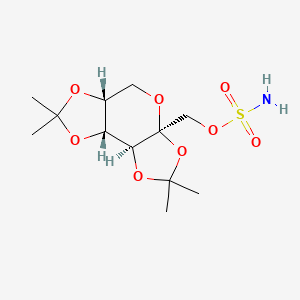
Topiramate (Topamax) is an antiepileptic drug used as adjunctive therapy for partial and secondary generalized epilepsy. It is also prescribed for prophylaxis of migraine headaches. It blocks voltage-dependent sodium channels and potentiates gamma-aminobutyric acid (GABA) activity.
Maintenance doses range from 300 to 600 mg/day, given twice daily. Topiramate is largely excreted unchanged in the urine. The elimination half-life is 18 to 23 hours. Clearance decreases with renal failure. Co-administration of phenobarbital, phenytoin, or carbamazepine can result in decreased topiramate concentrations.
Common adverse effects include somnolence, dizziness, memory impairment, paresthesias, coordination difficulties, loss of appetite, and weight loss.
Therapeutic drug monitoring is helpful because drug metabolism varies widely from one individual to another. It is also useful for patients being treated with other anti-convulsant medications. Serum or plasma levels of topiramate are measured by a homogeneous enzyme immunoassay. Therapeutic range is 2-25 ug/m.
Specimen requirement is a red-top or green-top tube of blood.
References
May TW, Rambeck B, Jürgens U. Serum concentrations of topiramate in patients with epilepsy: Influence of dose age, and comedication. Ther Drug Monit. 2002; 24(3):366-374.
Ferrari AR, et al. Influence of dosage, age, and comedication on plasma topiramate concentrations in children and adults with severe epilepsy and preliminary observations on correlations with clinical response. Ther Drug Monit. 2003; 25(6):700-708.



 How to resolve AdBlock issue?