

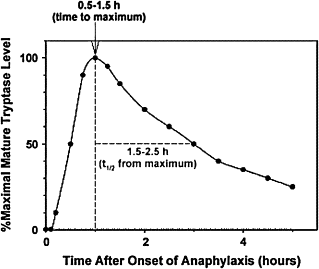
Tryptase is a neutral protease located in the secretory granules of mast cells. Tryptase is released into the circulation during mast cell activation and degranulation. Measurement of serum tryptase concentration is useful in assessing mast cell activation, which may occur as a result of anaphylaxis, allergen challenge, or systemic mastocytosis.
Tryptase is a better marker of mast cell activation than histamine, because the latter is cleared from blood within minutes. Serum tryptase levels peak in 1 to 2 hours. The circulating half-life is approximately 2 hours. Tryptase levels should be measured with 1 to 6 hours after an anaphylactic episode.
Tryptase is also the preferred biomarker for diagnosis of mast cell activation syndrome (MCAS). Elevated serum tryptase levels are also helpful in the workup of suspected mastocytosis. Patients with cutaneous mastocytosis often have serum tryptase concentrations higher than 11.5 ng/mL, while patients with systemic mastocytosis may have serum tryptase concentrations of 20 ng/mL or higher.
False negative results may be obtained if the specimen is drawn more than 12 hours after an anaphylactic episode.
Serum tryptase concentration is measured by Phadia ImmunoCAP. Reference value is 0 to 11.5 ng/mL. Higher levels indicate mast cell activation.
Specimen requirement is one red-top gel barrier tube of blood. Serum should be quickly separated from red blood cells and stored in a plastic vial.
References
Lyons JJ, Yi T. Mast cell tryptases in allergic inflammation and immediate hypersensitivity. Curr Opin Immunol. 2021;72:94-106.
Platzgummer S, et al. Recommendations for the use of tryptase in the diagnosis of anaphylaxis and clonal mast cell disorders. Eur Ann Allergy Clin Immunol. 2020;52(2):51-61.
Valent P, et al. Proposed diagnostic algorithm for patients with suspected mast cell activation syndrome. J Allergy Clin Immunol Pract. 2019;7(4):1125-1133.



 How to resolve AdBlock issue?