

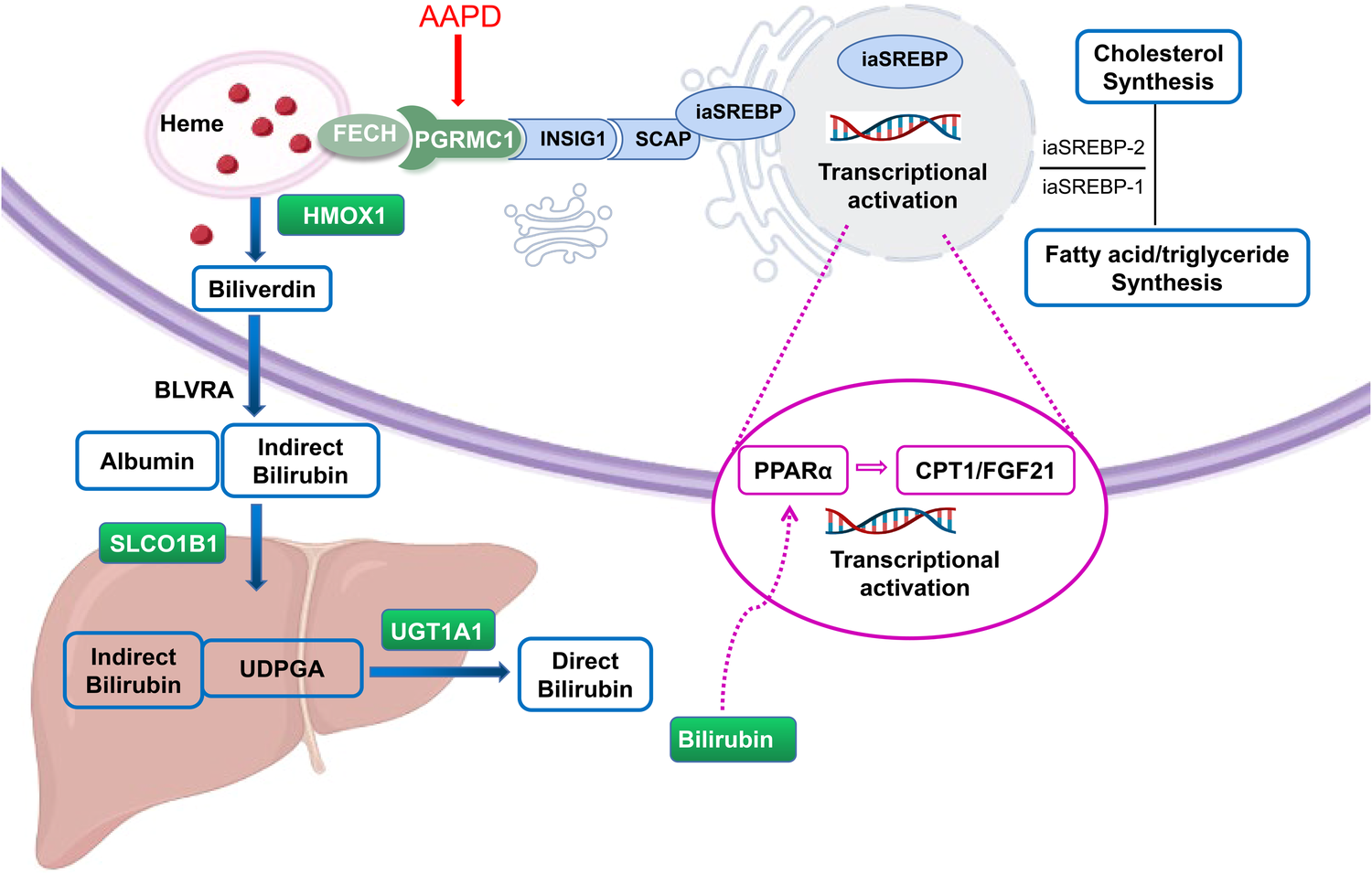
The UGT1A1 gene codes for the enzyme, UDP-glucuronosyltransferase (UGT). This enzyme is involved in the metabolism of bilirubin and some some drugs (irinotecan and atazanavir).
Variants of the UGT1A1 gene can cause decreased functional UGT, leading to hyperbilirubinemia. The severity of hepatic UGT is determined by the particular UGT1A1 mutation.
Crigler-Najjar syndrome is a rare, autosomal recessive disorder that affects 1 in 1 million individuals in the United States. It is caused by moderate to severe deficiency of hepatic UGT. Patients have unconjugated hyperbilirubinemia, kernicterus, and possibly hemolytic anemia.
Gilbert syndrome is a more common autosomal recessive disorder that affects 3% to 7% of the population. It is caused by a mild decrease in UGT activity. Affected individuals may be asymptomatic or have mild, fluctuating hyperbilirubinemia and intermittent jaundice.
Irinotecan (Camptosar, Onivyde) is a chemotherapeutic drug which is primarily used to treat metastatic colorectal cancer. It may also be used to treat metastatic lung, brain, and breast cancer. Irinotecan is slowly metabolized by carboxyesterases into a pharmacologically active metabolite, 7-ethyl-10-hydroxycamptothecin (SN-38), which is 1,000 times more potent than the parent drug. SN-38 is then conjugated by UGT to form an inactive metabolite, SN-38 glucuronide. This compound is readily excreted in bile and urine.
Irinotecan has a narrow therapeutic window, which is the difference between a therapeutic and a toxic dose. Twenty to 35% of patients who are treated with irinotecan develop severe diarrhea, neutropenia or both, primarily due to toxic levels of SN-38.
Elevated SN-38 is usually caused by a polymorphism in the UGT1A1 gene that produces an enzyme variant with decreased activity. The most common allele associated with decreased enzyme activity and irinotecan toxicity is UGTA1A*28. Approximately 10 to 15% of Caucasians and African Americans are homozygous for UGTA1A*28 and these Individuals have a 50% higher risk of developing severe neutropenia. Approximately 40% of patients treated with irinotecan are heterozygous for UGTA1A*28 and are also at increased risk of developing neutropenia.
Advanced knowledge an individual’s UGTA1A genotype provides physicians with the information needed to determine which patients might benefit from a reduced dose of irinotecan.
Atazanavir is a antiretroviral protease inhibitor for the treatment of human immunodeficiency type 1 (HIV). It inhibits hepatic UGT. Some UGT1A1 variants lead to more severe hyperbilirbuinemia.
References
Beutler E, Gelbart T, Demina A, Racial variability in the UDP-glucuronosyltransferase 1 (UGT1A1) promoter: a balanced polymorphism for regulation of bilirubin metabolism?, Proc Natl Acad Sci, 1998;95(14):8170-8174.
Liu X, et al, Association of UGT1A1*28 polymorphisms with irinotecan-induced toxicities in colorectal cancer: a meta-analysis in Caucasians, Pharacogenomics J, 2014; 14(2):120-129.



 How to resolve AdBlock issue?