

When autologous stem cells are not an option, the ideal source of progenitor cells is from the bone marrow or peripheral blood of an HLA-matched sibling. An HLA match decreases the risk of severe graft-versus-host disease (GVHD) and increases the chances of a successful engraftment. However, a full HLA-match occurs in only 25% of sibling donors. While HLA-matched allogeneic donors may be used, the process of finding a suitable donor can be lengthy and a fully HLA-matched donor may never be found for some patients. A full match from an unrelated donor is even less likely for potential recipients with a non-Northern European heritage due to fewer non-white donors and genetic heterogeneity.
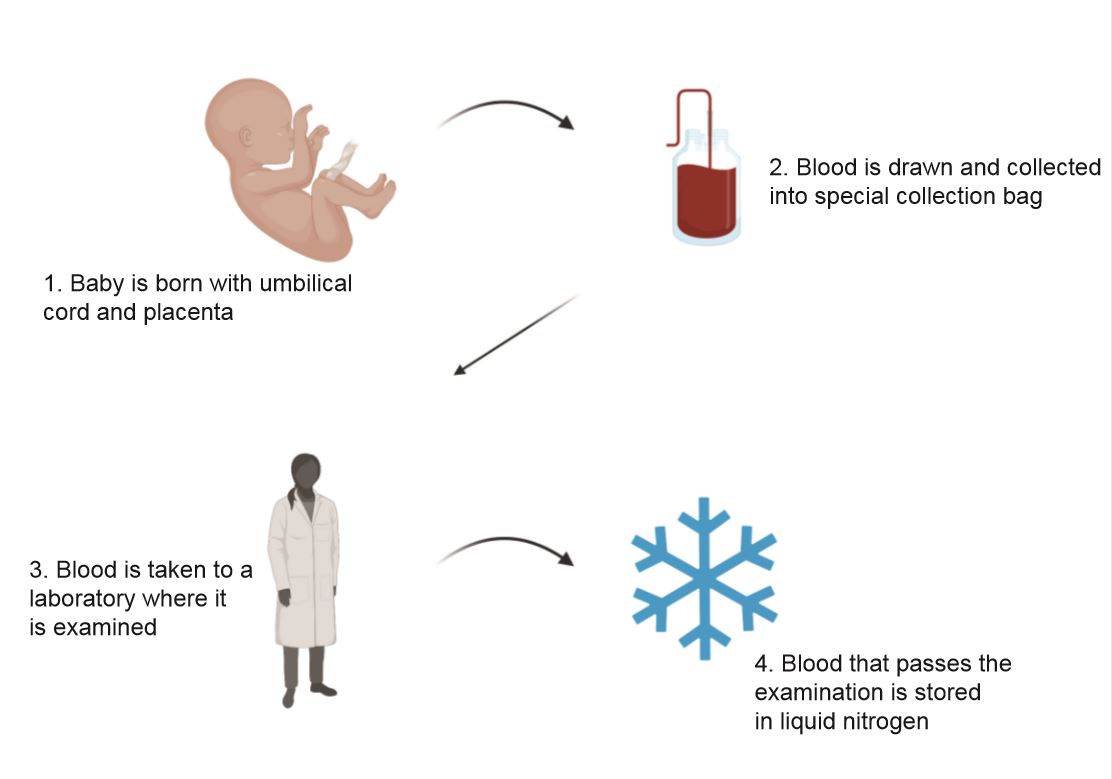
Umbilical cord blood from unrelated, partially HLA-mismatched donors has become a reasonable alternative source of stem cells for bone marrow reconstitution. In a cord blood transplant, stems cells are collected from umbilical cord blood. Umbilical cord blood is the blood left in the umbilical cord after a baby's birth. The cord blood can be frozen and stored until it's used in a cord blood transplant.
Cord blood has fewer stem cells available than other bone marrow transplant options. But the stem cells in cord blood can grow more blood cells than can those collected from bone marrow. Cord blood cells are also immunologically naïve because they have not been exposed to infections. This makes them more tolerant of a tissue mismatch between the cord cells and the patient. They can be used to transplant patients who do not have a fully matched available donor.
Cord blood transplantation can be limited by the number of cells present in a given unit, particularly for adults or larger pediatric patients. If a single unit is inadequate for engraftment, multiple cord blood units are sometimes attempted. A double umbilical cord blood transplantation has been shown to have success (in terms of GVHD, rates of engraftment, survival and transplant-related mortality) similar to single umbilical cord blood transplantation and unrelated bone marrow transplantation.
Reference
Ballen KK, Gluckman E, Broxmeyer HE, Umbilical cord blood transplantation: the first 25 years and beyond, Blood, 2013;122(4):491-498.



 How to resolve AdBlock issue?