

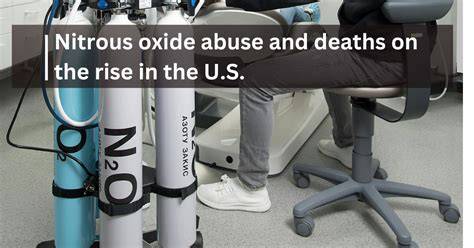
Nitrous oxide is a colorless gas used clinically as an inhalational anesthetic, analgesic, and anxiolytic. It is commonly referred to as laughing gas. Nitrous oxide is also used as a propellant in steel aerosol containers used as whipped cream dispensers and cooking sprays.
The inhalant is an increasingly popular recreational substance, particularly among teenagers and young adults (aged 20–39 years). They can inhale nitrous oxide from aerosol cans or purchase chargers, which are small metal canisters filled with nitrous oxide gas. To inhale nitrous oxide from the charger, a small handheld device is used to pierce the foil seal. A balloon is then filled with the gas, from which it is inhaled. Chargers are widely available at vape stores, grocery stores, convenience stores, and gas stations.
Because nitrous oxide chargers release gas at very low temperatures, people who inhale the gas directly from a charger can develop severe frostbite of the lips, mouth, throat, and lungs. Inhalation of high concentrations of nitrous oxide can cause seizures, acute psychosis, coma, and death.
When inhaled, nitrous oxide provides euphoric, relaxing, and hallucinogenic effects lasting from 30 seconds to 2 minutes. Long-term abuse of nitrous oxide blocks the activity of vitamin B12 (cobalamin), which is needed for erythropoiesis and nerve function. Chronic misuse produces neurologic, psychiatric, and hematologic abnormalities. Neurologic manifestations include weakness, gait instability, and paresthesia that can progress to sensorimotor polyneuropathy with demyelinating features. Psychiatric symptoms can include hallucinations, anxiety, depression, delirium, and memory impairment. Hematologic abnormalities include those resembling megaloblastic or pernicious anemias, and myelosupression. Recent evidence suggests that long-term use of nitrous oxide may also lead to pulmonary embolism and deep vein thrombosis.
Treatment includes discontinuation of nitrous oxide use and high-dose cobalamin given orally or by intramuscular injection weekly to monthly until symptoms improve.
References
Vohra V, Matthews H, Stroh-Steiner G. Notes from the Field: Recreational Nitrous Oxide Misuse — Michigan, 2019–2023. MMWR Morb Mortal Wkly Rep 2025;74:210–212.
Allan J, Cameron J, Bruno J. A systematic review of recreational nitrous oxide use: implications for policy, service delivery and individuals. Int J Environ Res Public Health 2022;19:11567.
Xiang Y, Li L, Ma X, et al. Recreational nitrous oxide abuse: prevalence, neurotoxicity, and treatment. Neurotox Res 2021;39:975–85.
Thompson AG, Leite MI, Lunn MP, Bennett DLH. Whippits, nitrous oxide and the dangers of legal highs. Pract Neurol 2015;15:207–9.
Wu H, Xu L, Zheng X, Zhou X, Zhang Y, Sun Y. Neuropsychiatric disorders associated with recreational nitrous oxide use. Clin Toxicol (Phila) 2023;61:961–7.



 How to resolve AdBlock issue?