

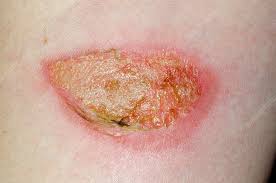
Wound specimens represent one of the most difficult types of cultures that the Microbiology lab interprets. Wound cultures specimens often arrive in the laboratory with limited information regarding the site and nature of the wound. Wound cultures that are improperly collected and/or contaminated with a wide variety of microorganisms are common. The types of specimens submitted for wound culture typically include tissues, aspirates and swabs. Workup includes Gram stain and culture for aerobic, and anaerobic bacteria.
Many pathogens can be responsible for wound infections. The most common bacterial species that cause wound infections are Pseudomonas aeruginosa, Staphylococcus aureus, Klebsiella pneumoniae, Enterococcus faecalis and Acinetobacter baumannii. In particular, in the initial phase of infections, within the first week, Gram-positive bacteria, especially Staphylococcus aureus, appear to be the most frequent colonizers. From the beginning of the second week, Gram-negative bacteria, such as P. aeruginosa and A. baumannii, start to colonize the wound, progressing to sepsis if they enter the lymphatic system and blood vessels.
Much information about adequacy of the specimen and the relevance of the organisms identified can be gained from a Gram stain of the original specimen. In general, the presence of many epithelial cells indicates a superficial collection, and the organisms identified may represent skin flora or contamination. The presence of white blood cells on the Gram stain is more indicative of pathogenic organisms from the culture.
Wound cultures typically require between 36 and 48 hours of incubation before results can be reported. Laboratory reports for cultures name the bacteria identified. If pathogenic bacteria are identified, then they are the likely source of the infection. An infection may be caused by a single pathogen or two or more pathogens (aerobes and/or anaerobes). The most common bacterial species are Gram-negative, including Pseudomonas aeruginosa, Escherichia coli, Proteus mirabilis, and Acinetobacter baumannii/haemolyticus. Staphylococcus aureus is the most commonly isolated Gram-positive bacterium.
If more than three organisms are present, they may not be individually identified but reported as mixed bacterial flora. This may represent a mixture of normal skin flora and potential pathogens cultured from a wound site that was not properly cleansed before collecting the specimen. However, common primary pathogens such as Enterococcus species, Staphylococcus aureus, beta-hemolytic Streptococcus species, and Pseudomonas aeruginosa are typically isolated and characterized in mixed culture.
Anaerobes frequently recovered from closed postoperative wound infections include Bacteroides fragilis, Prevotella melaninogenica, Peptostreptococcus prevotii, and Fusobacterium species. Anaerobes are seldom recovered in pure culture (10% to 15% of cultures). Aerobes and facultative bacteria when present are frequently found in lesser numbers than the anaerobes. Anaerobic infection is most commonly associated with operations involving opening or manipulating the bowel or a hollow viscus (eg, appendectomy, cholecystectomy, colectomy, gastrectomy, bile duct exploration, etc).
Nucleic acid amplification testing and mass spectrometry using matrix assisted laser desorption ionization time of flight (MALDI-TOF) can identify the bacterial genus and species in less than an hour after the bacterial colony is grown on the culture media.
For many of the bacteria identified in wound cultures, antibiotic susceptibility testing is also performed to determine which antibiotics will be effective in inhibiting the growth of bacteria.
Reference interval is a negative Gram stain and no growth on culture. A negative culture is usually reported as no growth seen in 5 days.
Specimen requirements include aspirate, purulent exudate, or swab. Specimens must be collected to avoid contamination with indigenous anaerobic flora from skin and mucous membranes.
References
Baron EJ, et al, A guide to utilization of the microbiology laboratory for diagnosis of infectious diseases: 2013 recommendations by the Infectious Diseases Society of America (IDSA) and the American Society for Microbiology (ASM). Clin. Infect. Dis, 2013;57:e22–e121.
Elsayed S, et al, Utility of Gram stain for the microbiological analysis of burn wound surfaces. Arch. Pathol. Lab. Med, 2003;127:1485–1488.
Spears M. Best technique for obtaining wound cultures. Plast Surg Nurs. 2012; 32(1):34-36.
Doern GV and Brecher SM. 2011. The clinical predictive value (or lack thereof) of the results of in vitro antimicrobial susceptibility tests. J. Clin. Microbiol. 49:S11–S14.
Puca V, et al, Microbial Species Isolated from Infected Wounds and Antimicrobial Resistance Analysis: Data Emerging from a Three-Years Retrospective Study, Antibiotics, 2021;10(10):1162.



 How to resolve AdBlock issue?