











Neurofascin-155 IgG4 Autoantibody
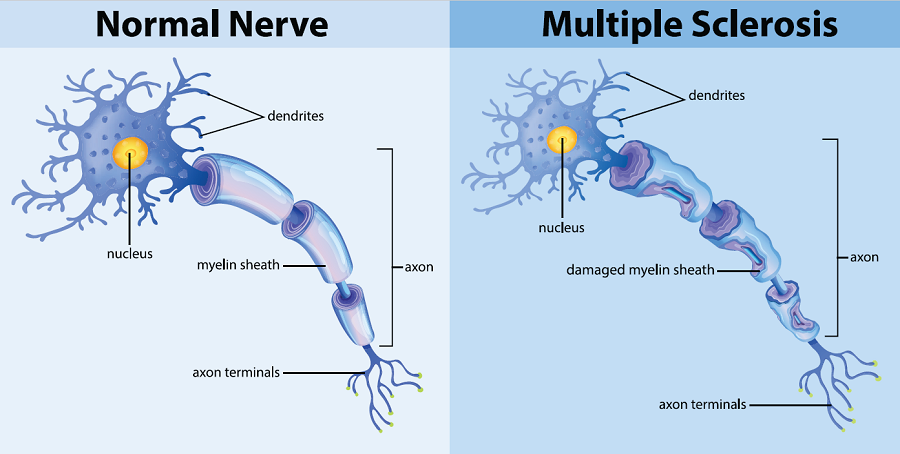
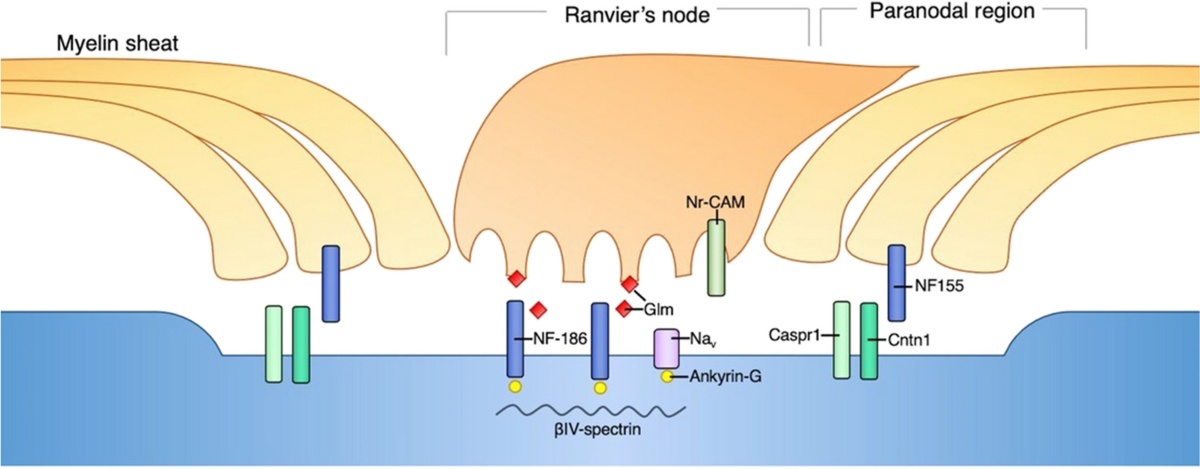
Nodes of Ranvier are gaps along the myelin sheaths that cover the axons of the peripheral nerves. They contain many ion channels that are required to form an action potential. The node of Ranvier recharges the action potential and increases signal conduction.
Neurofascin-155 (NF155) is a paranodal protein of importance for the function of the node of Ranvier. It is expressed in both the central and peripheral nervous systems.
IgG4 autoantibodies against NF155 have been identified in 4-18% of patients with Chronic Inflammatory Demyelinating Polyneuropathy (CIDP). This subgroup of patients is characterized by younger age at onset (20-30 years), ataxia, gait disturbance, tremor, and distal weakness. They are often refractory to treatment with intravenous immunoglobulin (IVIg) or steroids but may respond to plasmapheresis or rituximab.
The primary effect of IgG4 anti-NF155 antibodies is likely to be the blockade of interactions between N-155 and CNTN1/CASPR1, which leads to Schwann cell terminal loop detachment from axons at paranodes.
Mayo Clinic Laboratories detects NF155 IgG4 antibodies by incubating patient sera with a cell line that expresses human NF155. Antibody binding to the cells is detected by flow cytometry.
References
Cortese A et al, Neurofascin-155 as a putative antigen in combined central and peripheral demyelination, Neurol NeuroImmunol Neuroinflamm, 2016;3(4):E238.
Querol L, et al. Neurofascin IgG4 antibodies in CIDP associate with disabling tremor and poor response to IVIg. Neurology. 2014;82(10):879-88.
Kira J, Anti-Neurofascin 155 Antibody-Positive Chronic Inflammatory Demyelinating Polyneuropathy/Combined Central and Peripheral Demyelination: Strategies for Diagnosis and Treatment Based on the Disease Mechanism, Front Neurol, 2021;12: https://doi.org/10.3389/fneur.2021.665136